In a world increasingly shaped by science and technology, questions can often arise about the value and place of the humanities in higher education.
CMC’s Gould Center for Humanistic Studies explores—and helps answer—these questions through meaningful opportunities that celebrate the humanities and make evident their instrumental role in navigating contemporary complexities with compassion, integrity, and historical wisdom.
This academic year, the Gould Center marks its 40th anniversary, ever committed to providing “research, study, and experience in art, literature, history, philosophy, and other fields as a means to understand and develop the power and use of the imagination.” Since its founding, the Center has sought to identify the critical intersections between the humanities and the pulse of the era— “science, industrialization, and changing values” during those early years (and perhaps not so different four decades later)—to prepare responsible leaders and help humanity flourish.
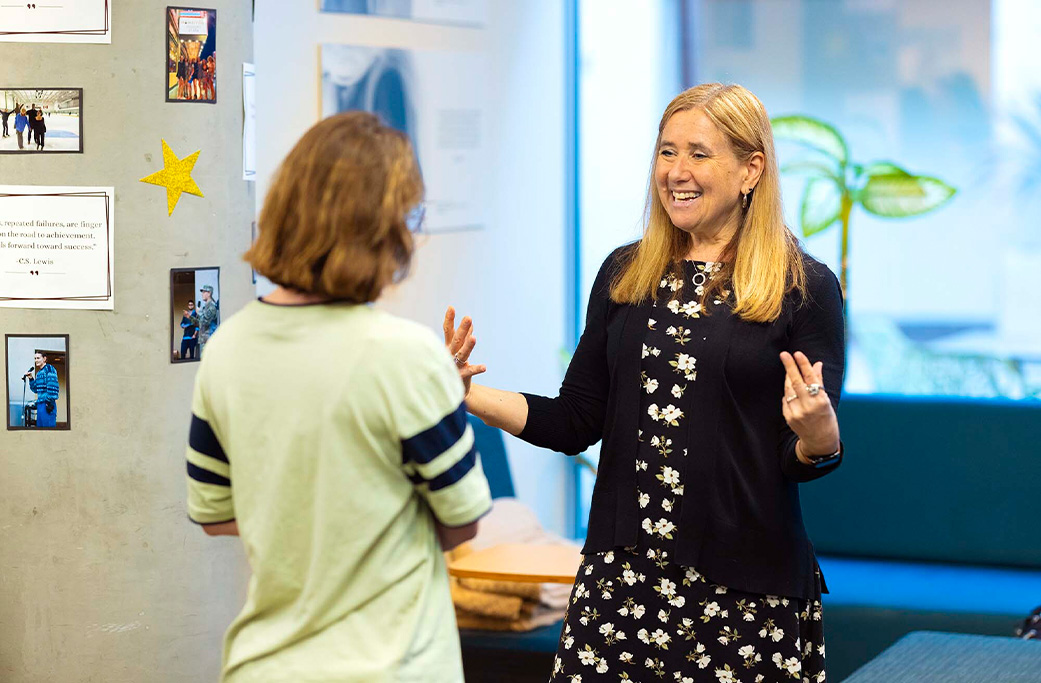
Leading the charge to promote and preserve the humanities today is Amy Kind, Director of the Gould Center and the Russell K. Pitzer Professor of Philosophy. A recognized scholar in the humanities who nurtured her initial interests thanks to a liberal arts education, Kind discovered a “wonderful synergy” in the Center’s distinct commitment to imagination. Her research—and the underpinning of her Gould Center leadership—illuminates the transformative power of imagination to teach us about the world and shape a more well-rounded future.
“Imagination underlies our empathetic connections with people. It has important consequences for our ethical engagement with others. It helps us understand our political opponents. Imagination plays a role in envisioning a better world and seeing the way to bring that about,” she said.
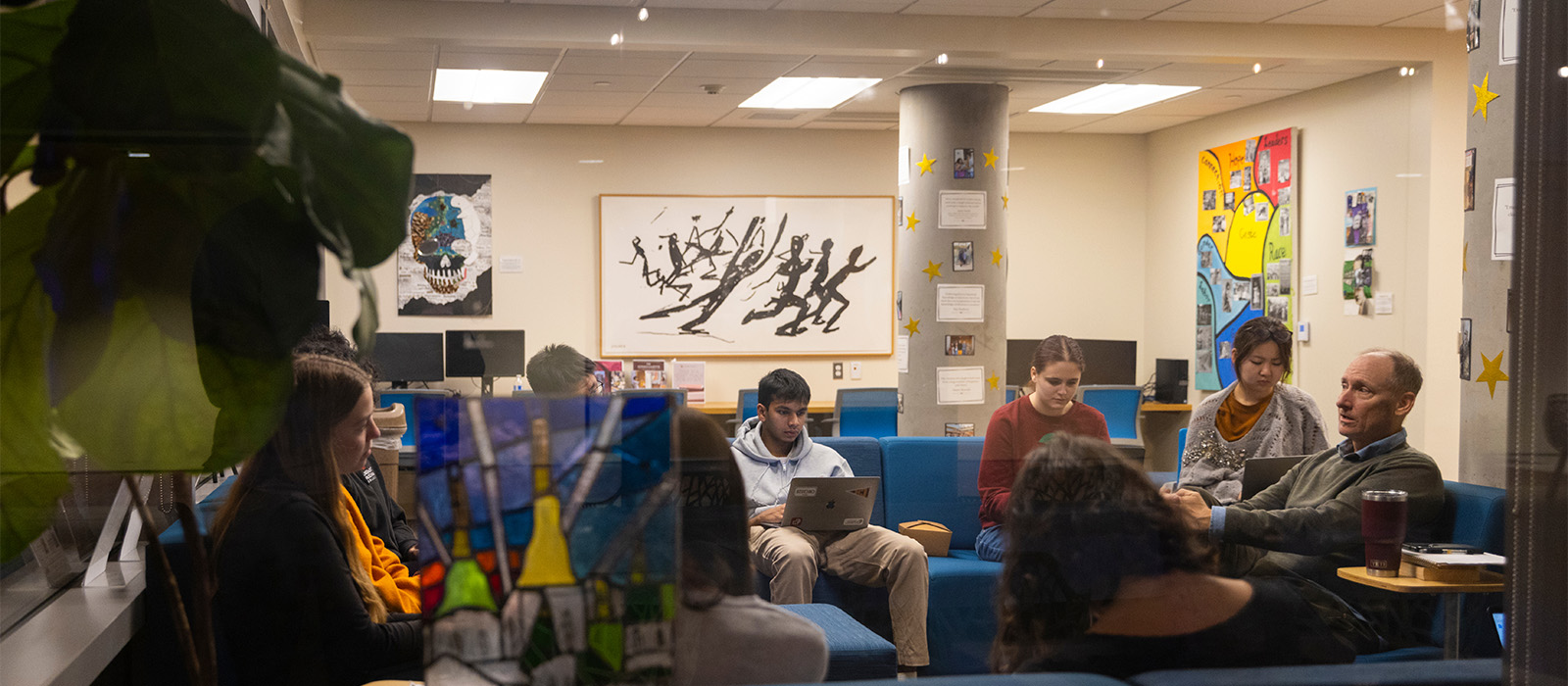
Kind’s philosophy on imagination pulses throughout the Center’s tremendous range of opportunities for students to pursue their personal and intellectual interests, including fellowships and leadership positions, research with faculty, internships, and self-directed special projects.
One such project, “The Impact of AI on the Humanities,” was spearheaded by Jason Bao ’27, a double major in Psychology and Philosophy, who led a team of fellow students through rigorous inquiry on this complex and timely topic.
“I believe our work exemplifies the diversity inherent in humanistic disciplines and the myriad intersections between AI and the humanities,” said Bao, whose involvement with the Center “has been an irreplaceable aspect of my time at CMC and instilled a respect for humanity that I hope will be unshakable.”
Kind has encouraged the inclusion of AI-related research in a swath of Gould Center projects, committed to preserving human imagination as an imperative for lives well led. The alternative, “offloading imaginative tasks to AI,” she said in a recent CMC Conversations podcast episode, would be a “problem for the future of humankind.”
Scott Kosch ’93 P’27 P’28, chair of the Gould Center’s Board of Advisors, emphasized that, in the AI era, employers will increasingly demand “the judgment, ethical reasoning, and communication skills that humanistic training develops.”
“The most sought-after hires at leading AI companies aren’t just engineers. They’re philosophers working on alignment, linguists shaping how systems communicate, and ethicists deciding what machines should refuse to do,” said Kosch, managing partner of Kosch Capital. “Disciplines often dismissed as mostly academic—philosophy, history, literature, languages, religion, and creative arts—have become essential to the development of new technologies and scientific breakthroughs.”