Christopher Walker ’69.

Portrait by Shay Studios, additional photos by Anibal Ortiz and Bauman Photographers

A collection of contemporary artworks has transformed CMC’s campus into a world-class destination for public art. Now, the dynamic visionary behind the program—Christopher Walker ’69—is enjoying his own deserving moment in the spotlight.

In recognition of Walker’s vast contributions, deep expertise, and earnest initiative, CMC’s Board of Trustees voted this past spring to name the Public Art Program the “Walker Public Art Collection.” Walker described himself as feeling surprised by the Board distinction.

“This is the highest honor I’ve received at CMC. It’s important to me that I started a program that is now a contemporary art collection that—like the CMC adage—fights above our weight class,” he said.

Since 2012, the College’s commitment to a vibrant public art program has resulted in a rapid sequence of installations by distinguished artists—Carol Bove, Chris Burden, Ellsworth Kelly, Jeppe Hein, Damián Ortega, Jaume Plensa, Mary Weatherford, Pae White, and Anicka Yi.
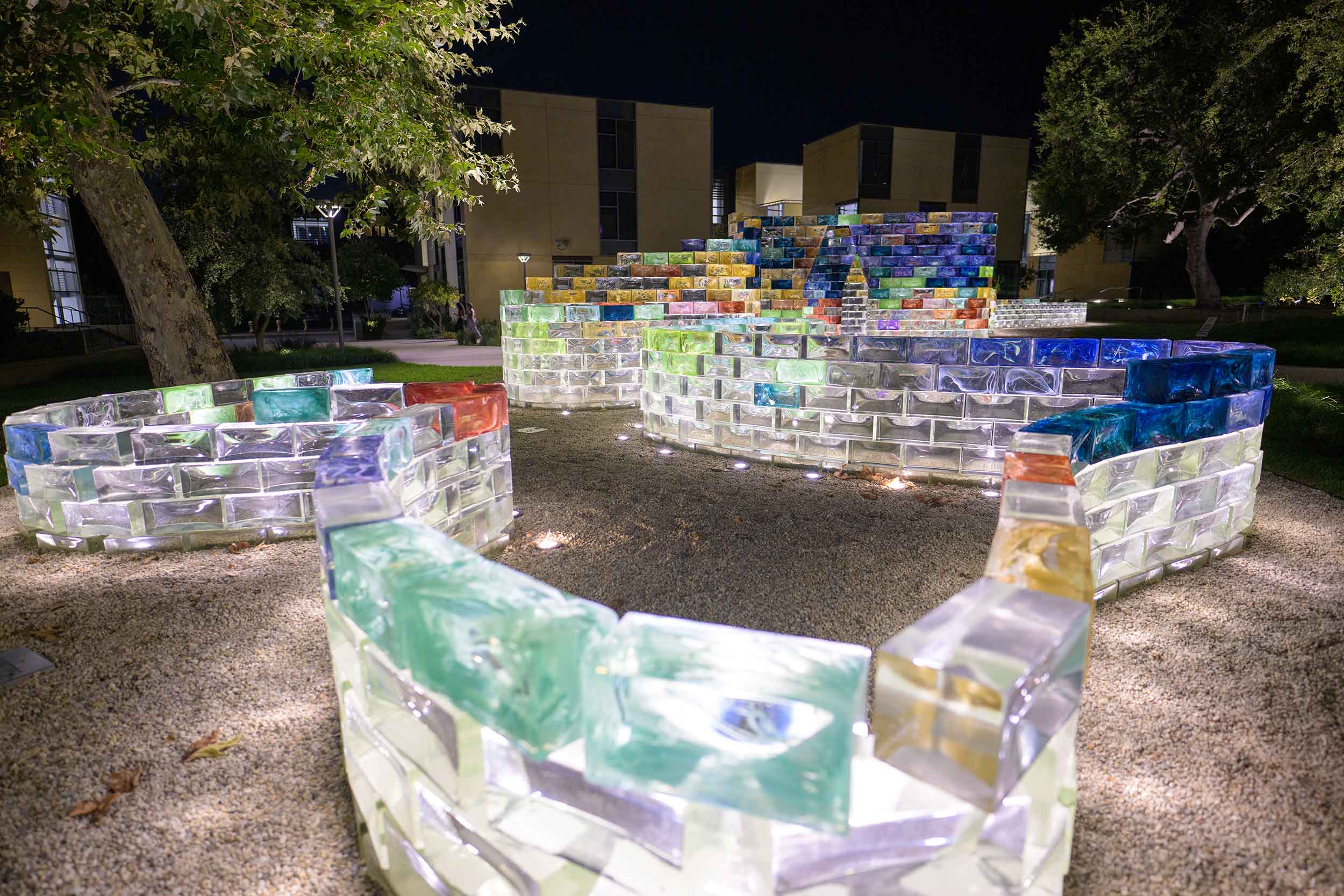
Qwalala art installation at night.
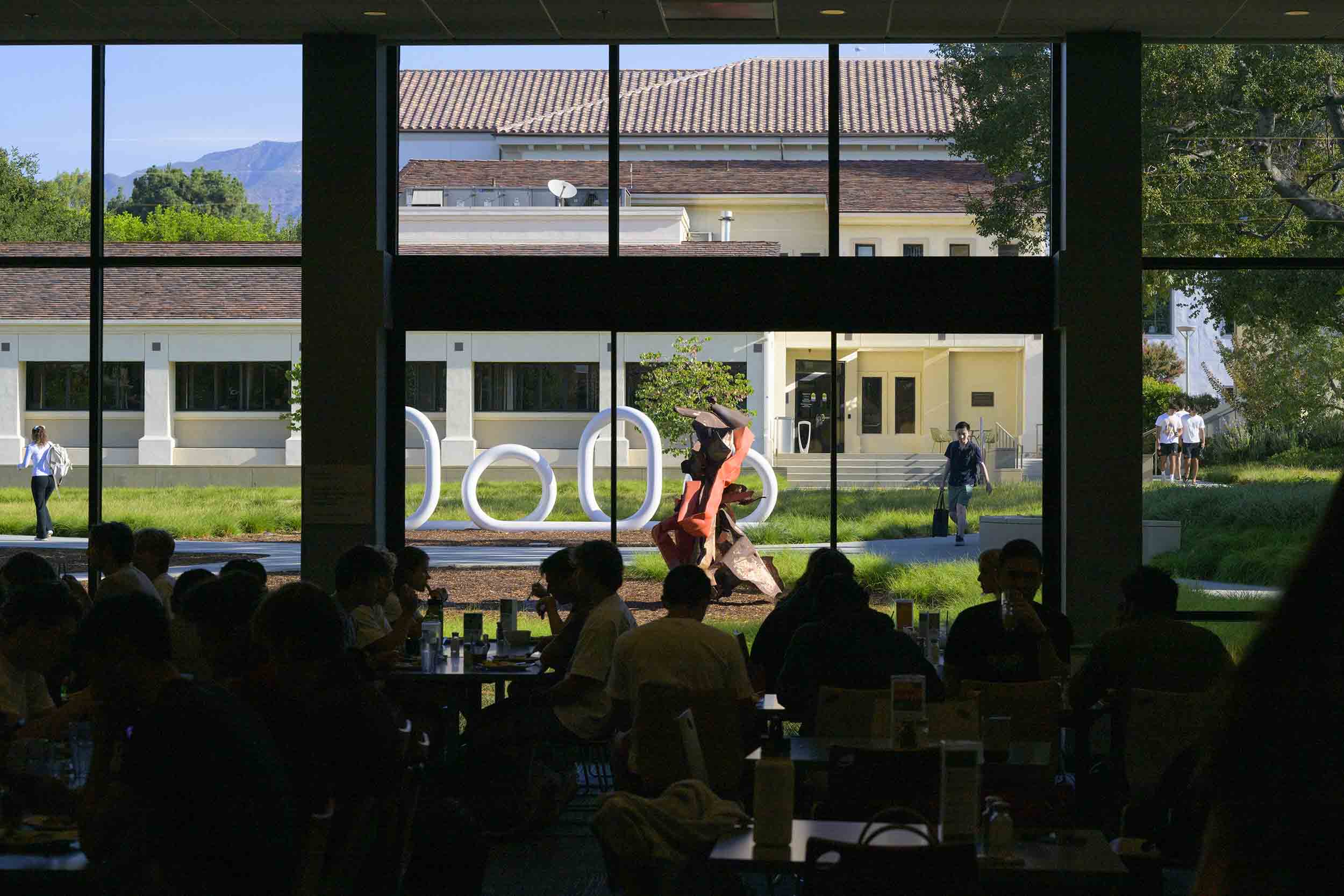
Silhouetted shot through Collins Dining Hall to the 'Loops' art installation.

Fueled by his belief that art and a liberal arts education go hand in hand, Walker has been at the center of that incredible growth. Rather than being confined to a museum, the CMC works—according to Walker—are intended “for people to pass by, think about, and be challenged by. People understand that it’s art, and should be appreciated and thought about. Like how a professor asks a question, each work of art asks a question, if people take the time to think about it. Each one tells a story.”

“The vision that Chris had for our public art was really inspirational,” said CMC Trustee Shaw Wagener ’81, who is a member of the CMC Art Advisory Panel, which is chaired by Walker, who served as a trustee for 30 years and is now a CMC Life Trustee. “The mindset that Chris brought to CMC is that art should be seen all the time. It should be part of your daily ritual.” 

Walker’s early interest in art was sparked during his junior year at CMC when he took a Western Art survey course at neighboring Pomona College. That interest grew over the years, and Walker began acquiring pieces of art while working in Hong Kong as a corporate banker, leading him to years of service on the boards of the Los Angeles County Museum of Art and the Museum of Contemporary Art in Los Angeles, as well as on the Trustee Council of the National Gallery of Art. 

According to Walker, four principles guide CMC’s public art acquisition strategy:

  • “Only the art of living artists” is collected “to directly support their practice and provide critical financial support”;
  • Commissions are competitive, with two or more artists submitting concept proposals;
  • Because art is international, proposals from artists in other countries are considered for every commission;
  • Commissions, acquisitions, and gifts are supported by private donors.

“By and large, we’ve been able to accomplish all four,” Walker said, crediting “the ideas, energy, and support of three Trustee Chairs—Harry McMahon ’75 P’08 P’09, David Mgrublian ’82 P’11, and Ken Valach ’82—as well as CMC President Hiram Chodosh,” who also sits on the CMC Art Advisory panel.

In addition, Walker proudly emphasized: “All of the art was privately acquired thanks to the kindness and generosity from friends of the College.”

At the Robert Day Sciences Center opening ceremony in September, the further expansion of CMC’s public art collection was celebrated with the dedication of three more significant works: Damián Ortega’s dramatic Magnetic Field, which resonates throughout the RDSC, where it hangs high above the atrium; H£Rñ§ñ0H§L* by Anicka Yi; and Jaume Plensa’s To JW Goethe (variant VIII), which are on display in the RDSC’s Quantum Library and the Agora, respectively.

Magnetic Field is the latest example of Walker’s efforts to bring revolutionary public art to campus, said Kimberly Shiring. She has been deeply involved with CMC’s public art program for more than a decade, serving as its director during this recent growth period, and currently supporting the program in a consultancy role.

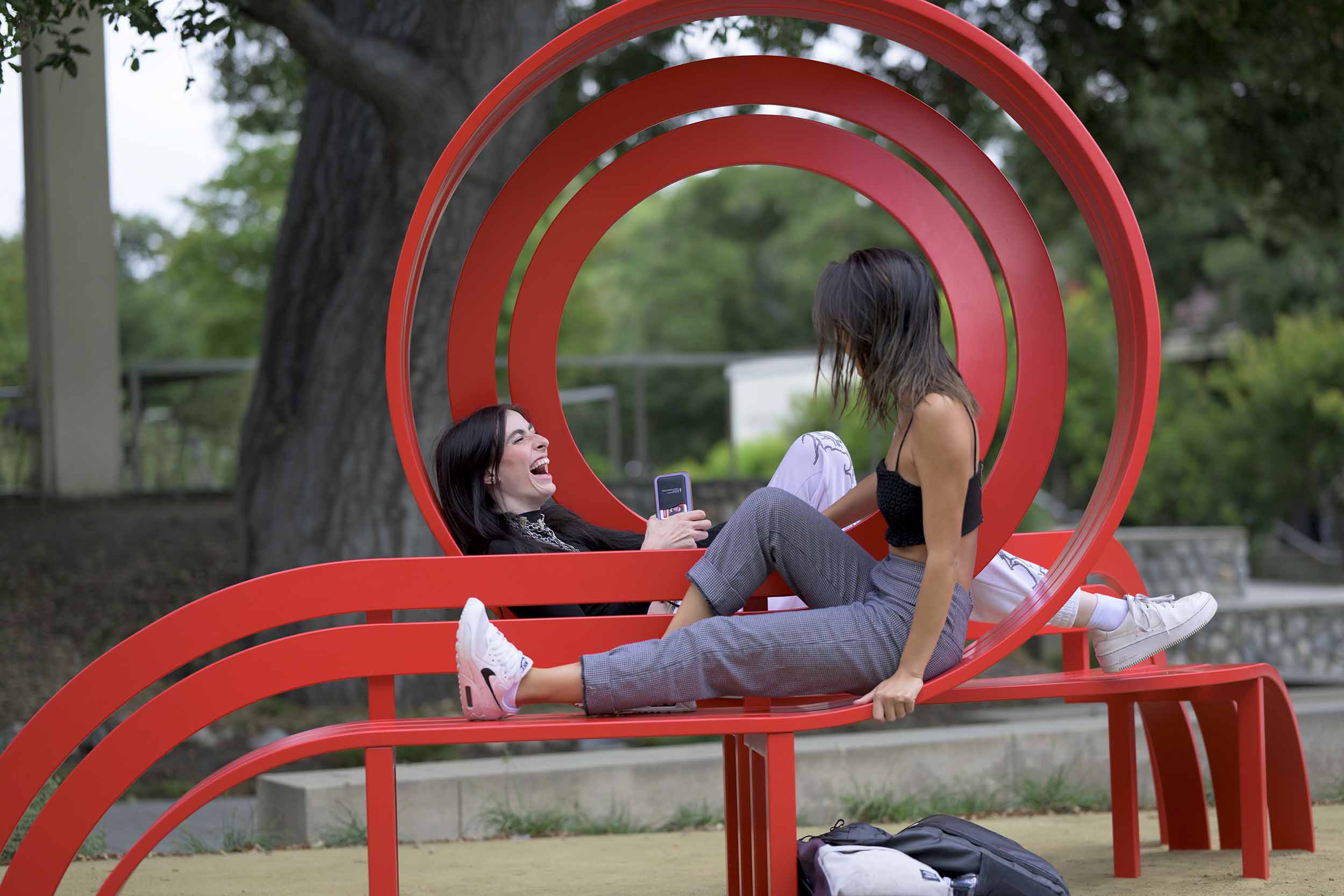
Two students enjoying the social benches by Jeppe Hein.

“In the spirit of The Open Academy, the Walker Collection invites a variety of experiences with campus artworks with the intention that Magnetic Field continues a dialogue on creativity and differing interpretations,” said Shiring, who shepherded CMC’s large-scale public art projects, including Magnetic Field.

To foster dialogue and understanding with Ortega, for instance, Walker traveled to Mexico City twice to meet with the artist in his studio. “Collecting art is a way to meet the artist,” Walker said, offering a window into one of the reasons he relishes his role at CMC. “Artists are among the most interesting people on the planet, and conversations with them are fascinating.”

With the future Roberts Campus Sports Bowl site on the horizon, Wagener noted with excitement the coming opportunities to expand the Walker Art Collection even further, populating the new shared spaces with significant artworks. In addition, he said that establishing the Walker Art Collection fulfills a need to privately fund maintenance to preserve the College’s current works so they stay “in first-class condition” and further honor Walker’s contributions to CMC.

“I think the mark that Chris has left on the campus is going to be here for a very, very long time,” Wagener said.

—Anne Bergman

* Also a work of art meant to inspire interpretation and imagination, the title was generated through a machine-learning model trained on the artist's prior language with texts from poetry, marine biology, and quantum theory. 

CMC MAGAZINE

|

Fall 2025

Back to Issue