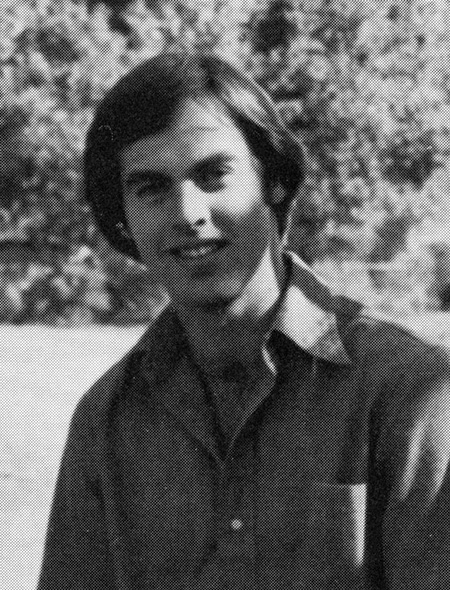
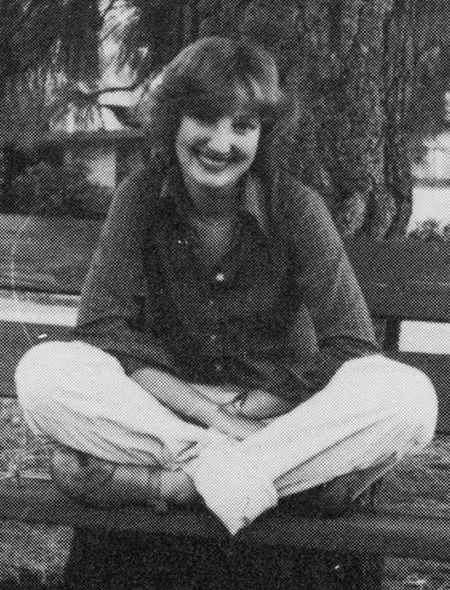
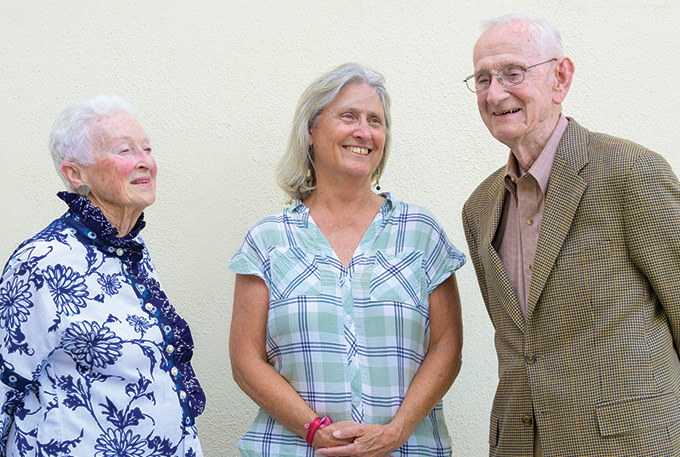
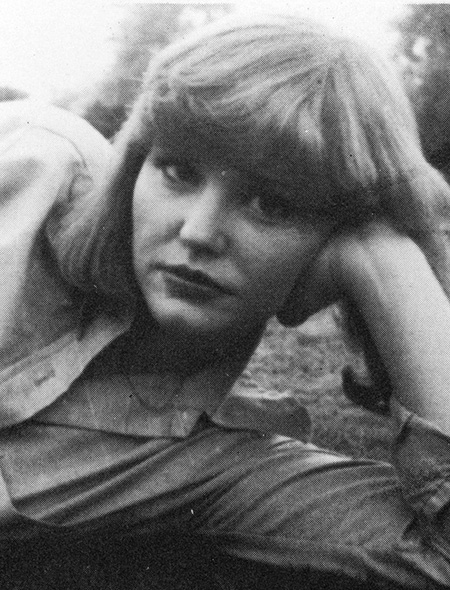
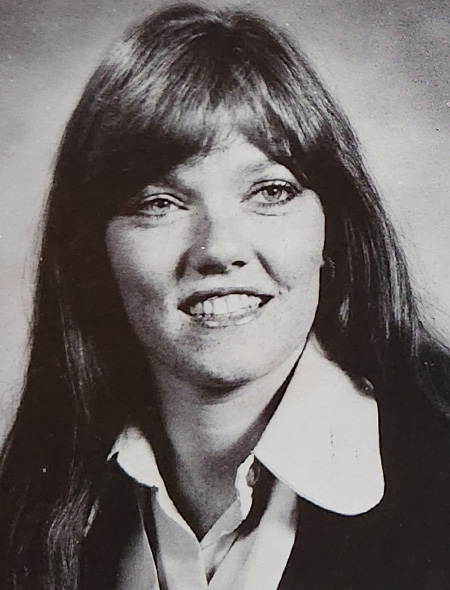
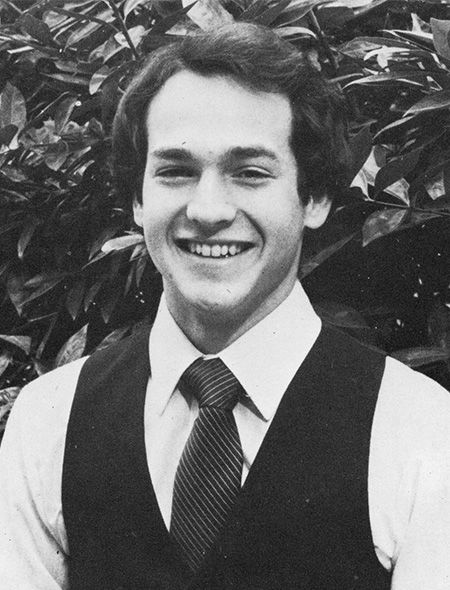
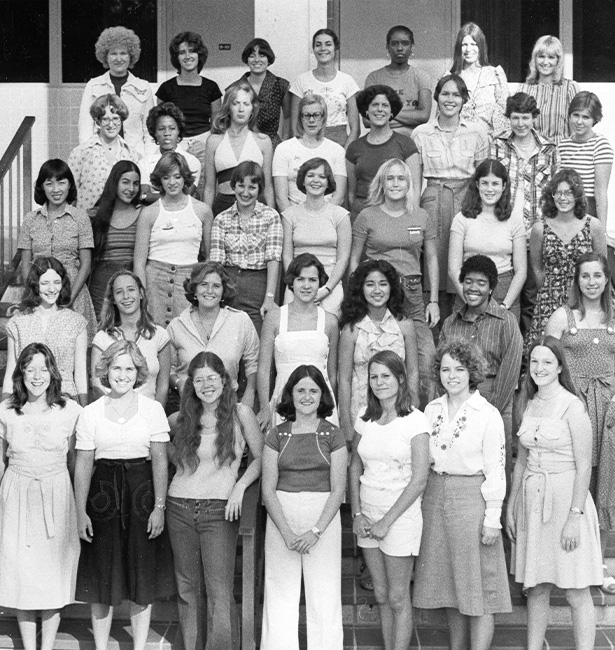
During CMC’s Alumni Weekend 2025, members of the Class of 1980 gathered for their 45th reunion. As the first four-year graduating class after the College adopted co-education in the fall of 1976, CMC Magazine asked six 1980 classmates—four women and two men—to join us for a campus conversation to reflect on the history of the landmark year, focusing on their arrival to then-Claremont Men’s College and all that followed. With an eye on CMC’s 50 Years of Co-Education Anniversary celebration beginning in the fall of this year, the group shared memories and moments that were special to them individually—and with decades of additional life experiences and introspection, feel even more significant collectively.

Interview by Thomas Rozwadowski
Photos by Anibal Ortiz and courtesy of CMC Archives

Body

How did you come to learn about—and eventually choose—CMC during its first year of co-education? What did the decision mean to you then? What does it mean now?

Kathy Hurley: Kathleen (Fitzpatrick) and I were laughing earlier about how we ended up here. We were both in Denver in high school, both considering Harvey Mudd for college. We talked to Bob Rogers ’52 (who worked in the then-CMC/Mudd admission office), and he said to both of us, ‘Well, why don’t you go to CMC?’ And we both said, ‘Um … well?’ (Laughing). And he said, ‘No, (CMC) is going coed! You should really think about it.’ He sold both of us and we applied.

Kathleen Fitzpatrick: I always knew I wanted to be an engineer. I came to CMC and did the 3-2 program, went on to get my industrial engineering degree (bachelor’s), and a master’s at Stanford. I was hired at Hewlett Packard and worked as the only woman engineer on the production line for the first couple of years.

The first female class after Claremont McKenna transitioned to co-education.
George Davis.

George Davis: My family has a history with The Claremont Colleges. My dad was Pomona. My mom was Scripps. My sister went to Scripps. One of my brothers went to CMC and graduated in ’72. First drama major. His suitemate was Robin Williams (who attended CMC in 1969-70).

For me, Claremont was a lot about discovery. I didn’t really know exactly what I wanted to do … but I just met so many amazing, bright, aggressive people that kind of knew what they wanted to do … it taught me to wake up a little bit, get more focused, and take advantage of the resources in front of me.

Carrie George: Before CMC, I lived—I guess—a pretty sheltered life. I went to a very blue-collar high school. The transition to being with a group of people whose parents—at least some of them—were in the professions … I mean, I knew people whose parents were mechanics and fishermen. I didn’t know what was out there in the world.

Cheri Strelow: Back in those days, you didn’t apply to 12 or 13 different places like they do nowadays. You applied to two or three. I applied to the University of Illinois and CMC. I got in at CMC and … I’d never been to California. I hadn’t seen the College before I came. But I thought, ‘Well, I’m going to go. And if it doesn’t work out, I’ll transfer to the University of Illinois.’ I got out here and met a lot of great friends—who are still friends—and, of course, I ended up staying.

Jeff Arce: I give my dad (Bill, legendary CMC athletic director/coach) credit for it, because I don’t remember getting a lot of counsel … ‘like, where should I go to college?’ Which, when I think now with my three kids, every one of them, I was like, ‘you need to start thinking about where you’re going to go to college … let’s go on a tour, let’s check the websites.’ But I remember my dad, one time while we were driving just asked, ‘so, where do you think you’re going to go to college?’ Out of the blue. Obviously, I lived in Claremont … and he said, ‘you should apply to CMC.’ And I was like, really? I hadn’t even thought about it until then. I knew it as a men’s college.

Carrie George.

Carrie George: CMC opened things up. It helped me with learning how to think, learning how to problem solve. That preparation has served me well my whole life.

Jeff Arce: I look back now at the decisions in my life that were really critical … and (one of the most) important ones in my life … was coming to CMC. It really did change me. It opened my eyes and it opened doors. Had I gone to another institution, I think it would have been a completely different outcome for me.

Kathy Hurley: What I love is that we came to CMC … because it gave us the opportunity that we wanted. It was for the education, and truly the opportunities, that we really were desiring at that time.

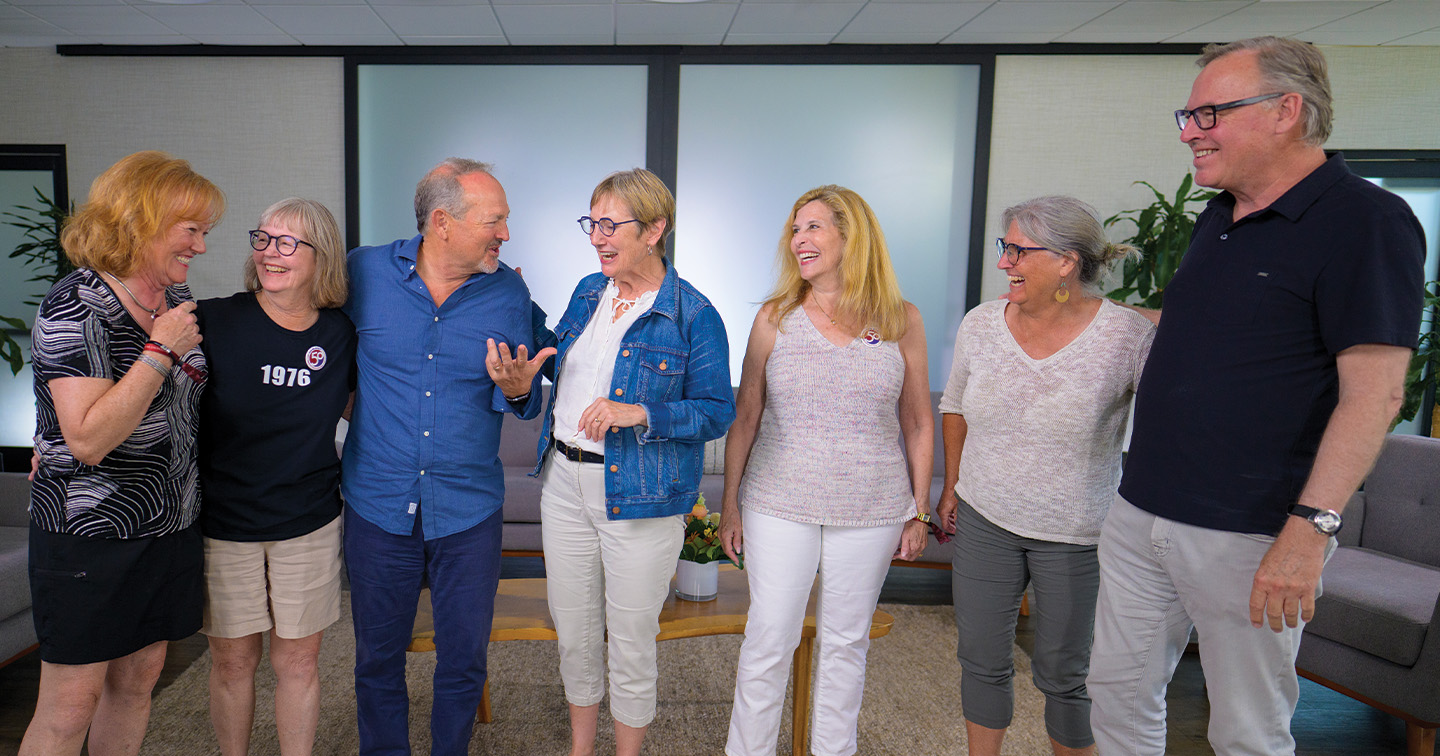
The Class of 1980 interviewees during their roundtable discussion at Alumni Weekend 2025.

Class of 1980 classmates, from left: Kathleen Fitzpatrick, Cheri Strelow, Jeff Arce, Carrie George, Mari Adam (CMC's 50 Years of Co-Education co-chair), Kathy Hurley, and George Davis.

-

What were those early years of co-education like? How were you challenged? How did you have fun? Were you excited? Scared?

Carrie George: I don’t think I was scared. I wanted to go to a smaller college. My mother told me, starting in about second grade, that I had to get good grades because I had to earn a scholarship to college … and my high school, for some reason, had an excellent counselor. And she said, ‘what about this college?’ And I did what (Kathy) did: ‘Well, I don’t think I’m going to Claremont Men’s College!’ And she said, ‘no, no, they’re going coed.’ But it was still like, ‘oh, for the first year? I don’t know about that.’ Then she told me about the economics program. She told me about political science, too … and that (all) sounded very intriguing.

Cheri Strelow: Neither of my parents had graduated from college … and my parents were divorced. And my mom always said, ‘you’re going to college, because if you get married and your husband doesn’t have a job, at some point you will have to work.’ You know, that was the era. My mom grew up on a farm in Iowa. It was slightly different for me.

Carrie George: What (also) gave me comfort was that Scripps was right next door. So, I thought, ‘well, it’s not like I’m going to be out in the middle of the desert with a bunch of guys!’

Jeff Arce: So, I like to tell a funny story—well, I think it’s funny. But when I tell people I went to Claremont McKenna and it used to be Claremont Men’s College, they’re like, ‘oh, you went to a men’s college?’ Well, no, not really. The year I went there, 1976, was the first year they accepted women. And that’s because they wanted me to come there—because I said, ‘I’m only going to come to Claremont if you start accepting women.’ So, yeah, you’re welcome.

(All laughing).

Cheri Strelow: Thank you, Jeff.

Kathy Hurley: Yeah, we’ve always wondered who we 
should thank!

Cheri Strelow: I almost didn’t know enough to be nervous. And it was so welcoming. I mean, of course there were the handful of guys that didn’t want to have women here (and they could make it known) … but that wasn’t an attitude that I experienced on a regular basis.

I do remember going to a phone night … which was the annual time where students would get on the phone and call alumni and ask for donations. So, you know, here we were—freshman year—and women are calling only men, of course, because there were only men alumni. And some of them, I remember, they just hung up. I remember that.

Carrie George: But I also remember getting some men on the phone and having them say, ‘oh, this is so great! I’m talking to a woman who is at Claremont!’ So, you got the range of reactions.

Kathy Hurley: I was in Benson (Hall) … and really some of the funniest stories in Benson are that you figured the bathrooms had changed from being male bathrooms. But no, you had the whole urinal along one wall. And it flushed automatically! So, as women, you’re in there—(hear the flushing noise)—and it’s like, ‘wait a minute, who’s in here?’ (Laughing).

Carrie George: Particularly freshman year, your social life starts out being very concentrated with the dorms. And there were enough women there that we never felt alone.

Kathleen Fitzpatrick: We were just living our lives as students. We had women friends. We had guy friends. We went to parties.

Cheri Strelow: It was fun, because we were kind of a novelty. I think we were invited to more things than the average freshman (male student) because there were so few of us and we were new. Like, Jil (Stark, then-President’s wife) took us under her wing and, you know, she’d have these teas with us and she’d be knitting or crocheting or something …

Jeff Arce: I didn’t get to do tea.

George Davis: I know!

Carrie George: So, did you want to do tea?

George Davis: No.

(All laughing).
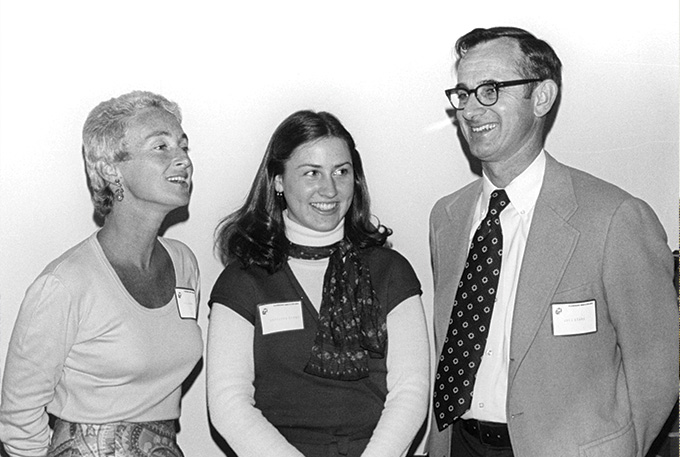
The Starks and Kathleen Hurley (center).
The Starks and Kathleen Hurley (center) recreating a photo from her arrival to college.

History in the (Re)making

“Remember me?” At Alumni Weekend 2025, Kathleen (Evans) Hurley ’80 P’07 joined CMC President Emeritus Jack ’57 GP’11 and Jil Stark ’58 GP’11 for a heartfelt reunion and recreation of their iconic 1976 photo from the College’s first steps into co-education. On March 15, 1976, Hurley—then a high school senior from Colorado—submitted her commitment deposit, reserving a place in the class to enter CMC the following fall, becoming the first woman to enroll at then-Claremont Men’s College. “It was maybe three days of a lot of attention,” Hurley said. “I’m grateful that I grew up all over the place, because that would have been really frightening if I hadn’t been used to talking to people that I didn’t know. But people were very welcoming. And I feel like once I got here for classes, CMC let me be. I just became one of the first few.”

-

Are there any moments—whether unique, empowering, or even odd—that speak to the times, or just stand out in your memory? Any important life lessons?

Cheri Strelow.

Cheri Strelow: For freshman orientation, you’d be on campus for a week before anyone else. So, it was just the freshman class and nobody else yet. We were still outnumbered (as women), but not by what it (became) once the upperclassmen came back. And the day the upperclassmen started coming back, we were at Collins … so, we all go to get, you know, food. And we walk in the dining hall and … everybody just stops. Stopped eating. Stopped talking. Stopped laughing. They looked at us and just stared.

I think it was the first time it really hit me that we were integrating into a larger environment that was predominantly male.

Kathy Hurley: (I was an athlete) … and I remember the day the women’s javelins arrived. And it’s just like, ‘OK, who wants to throw javelin?’ I was like, cool! So, I ended up throwing javelin, as well as running. Just a great example of opportunity (right there for the taking).

I also remember the first day of track practice. It’s just two of us (women) on the team, and I remember (our coach) looking at us like, ‘what am I going to do with them?’ So, he gives us (a long training run through the city), and I had only ever run a mile … but the two of us ran the whole thing! And I still say to this day, it was such an accomplishment to have done that. It really felt like, ‘wow, I can do anything. If you give me something here, I’m going to do it.’

Kathleen Fitzpatrick: I was very competitive. My dad was an engineer. My two brothers were engineers. I knew I wanted to be an engineer. I knew it was an all-male profession, and I’m going to CMC, where there’s a bunch of guys. But it just made sense for me. I had my head in the books because it’s intense—Monday through Thursday. And then Thursday night I did an all-nighter. I got all my homework done so I could be a normal student from Friday through Sunday … and I survived.

George Davis: (Being at CMC) made me grow up in a way that I hadn’t thought about before—you know, I’m competing with people (who have goals). I’m not a kid anymore. I had to think about how to be prepared for life, how serious I was going to be about certain things. It was very reinforcing for me.

Kathleen Fitzpatrick.

Kathleen Fitzpatrick: I learned how to use my voice. I learned that I could speak up, that I could ask questions in class, that professors were there to help me—not like in high school where it was a hierarchy and more sage on the stage. I took my notes. Took my tests. Got the grades. And it was just different. I tried to pass that along to my daughters. That no matter where you are in life, don’t let somebody make you think you’re less than you are, don’t let a guy put you down … be proud and use your voice.

Cheri Strelow: I have to say, I became a feminist here. I was not a feminist before I came here. I was just, ‘I’m going to college. And it happens to be this one.’ But (my CMC) experiences did absolutely influence me to become a feminist, and I know a lot of times throughout the years that it’s become a ‘bad word’… but I’m really proud of that identity.

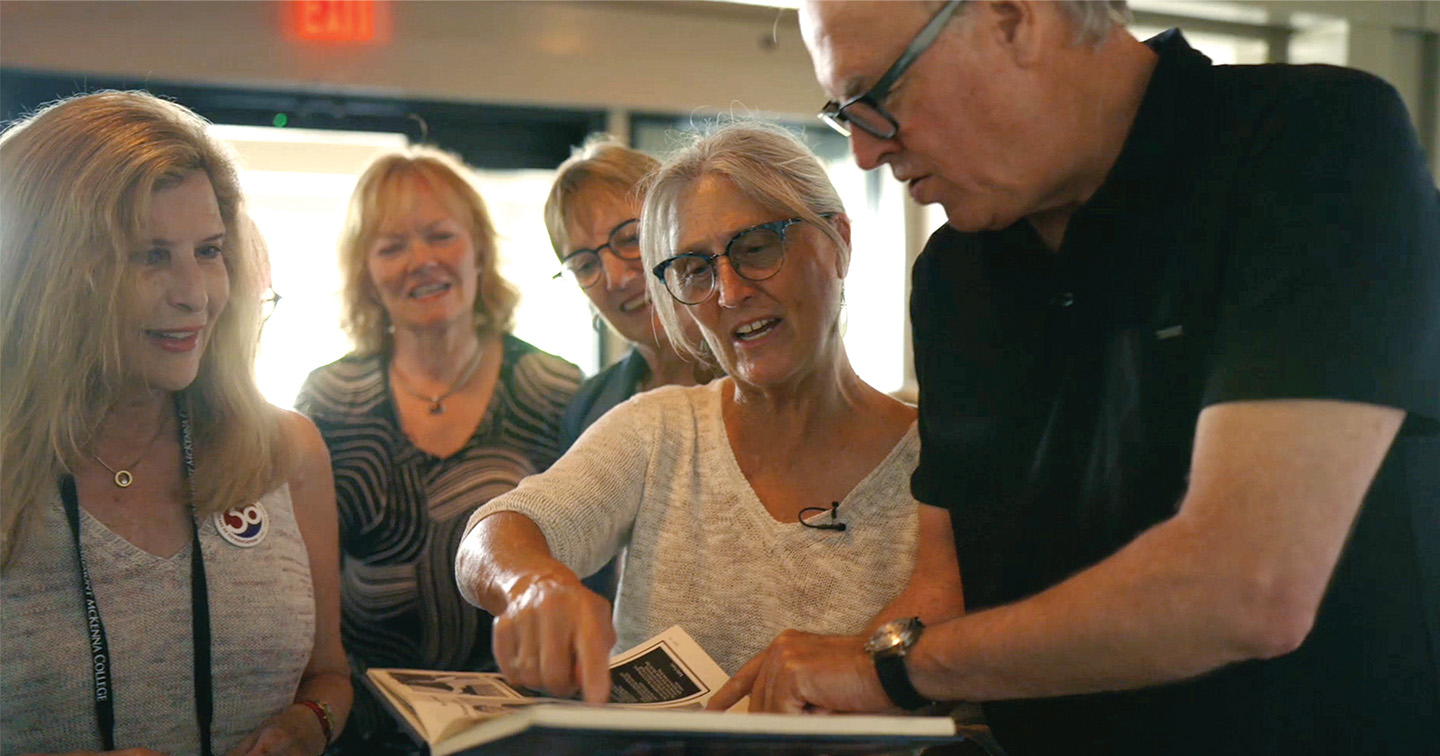
Members of the class of 1980 group looking through old yearbooks.

Kathleen Fitzpatrick: In retrospect—and I’ve been thinking about this a lot because my personal passion, my life passion, is to get more women into nontraditional careers—from this distance, 45 years later, I see how I’ve been fighting a fight. Fighting a battle for women to have equality. We were just starting our journey.

Cheri Strelow: I’ve come back to the campus quite a number of times to talk to the women students since we’ve left … and they don’t really care about (the history of) paving the way. But where they do seem to get very interested is once they get to a stage in their lives after CMC—where you can be a mentor to them. How do you get a job? Do you stay home with children? Do you not stay home with children? Where do you move? Whose career takes precedence? Is your husband ever going to stay home with the kids?

Carrie George: Nobody prepared me for what it was like to have a career and children. And that problem has not been solved. If you look at the wage differential between women and men now, you know, analytically that can be attributed to motherhood. This is an issue. And we just blundered into it with no preparation.

Cheri Strelow: We didn’t have any older women to really look to, to mentor us. They weren’t in the older classes.

Jeff Arce: In the moment, you don’t know that you’re making history, really. But it was a big thing. And right now, I mean, I can say that I was witnessing history. It was major. A major step for the College.

-

As we look ahead to the 50 Years of Co-Education Celebration in 2026-27—and all that has happened here in the decades since you first arrived—what hopes do you have for CMC? What makes you proud to call CMC your alma mater?

Cheri Strelow: The quality of the experience here—both educational and all of the people that I met and interacted with—really prepared me for lot of things in life that I may not have been prepared for before. And from the students that I’ve met when coming back to campus, I think that is still here. They are very articulate. They are very thoughtful. They ask a lot of good questions. And so, I’m really happy over the years that (the CMC experience) has not been diluted.

Jeff Arce.

Jeff Arce: I love something that President (Hiram) Chodosh said (at Alumni Weekend): Basically, to take CMC wherever you go. Leaving this experience being refreshed with CMC culture, I just want that surrounding me. It’s diversity. It’s acceptance. It’s tolerance. It’s the ability to have a discussion and not have it turn into an argument … I don’t want CMC to ever lose that culture.

George Davis: I think the College is truly unique in its ability to create leaders. It’s part of the whole Claremont experience—not just the curriculum. It’s the residential nature. It’s the type of people that get admitted and the reinforcing behaviors that go with that. And I love where everything is going with the physical (expansion and improvements to) campus. We (succeeded) in the 70s despite the infrastructure. (Laughing).

Kathy Hurley: Leadership comes in so many different ways and capacities. It isn’t defined by being a CEO or CFO or by a title. Leadership comes on the soccer field. It comes with nonprofits. It comes with open dialogue. It’s all levels. If we can help our younger generation—and us, too—continue to remember that, I think we’ve done our jobs.

Jeff Arce: I truly thank (my classmates), because if it wasn’t for you all coming in … somebody had to be the first. They blazed the trail. To allow the next generation and multiple generations to come here.

I am grateful for that. I am grateful for the school for making the decision—because it was absolutely the right decision. And I am glad I came (to CMC) to experience the same experience that you all did. I’m proud to be in this class because of you all.

This interview has been edited for length and clarity.

Meet the Class

Jeff Arce ’80 P’22, an Economics major (with an emphasis in Accounting), grew up in Claremont. His dad, Bill Arce P’80 GP’22, was the founding CMS athletic director and a Hall of Fame head baseball coach for the Stags. After moving to Honolulu, Jeff helped form The MacNaughton Group, developing retail brands and real estate projects in Hawaii. Daughter, Caitlyn, is a Class of 2022 alumna.

George Davis ’80 P’07, an Economics and Political Science major, grew up in Pasadena and Arcadia, Calif. He has worked in finance and technology roles, including most recently with Applied Materials and as CFO with both Qualcomm and Intel. George met his late wife, Nancy Nelson ’80, while at CMC. Son, Chris, is a Class of 2007 alumnus.

Kathleen Fitzpatrick ’80, a Management-Engineering major, grew up in Littleton, Colo. She is a pioneer in STEM, working early on as an engineer and engineering manager at Hewlett Packard, and later transitioning to advocacy work aimed at increasing equity, including leading programs at the Center for STEM Education at the University of Colorado, Colorado Springs. She lives in Black Forest, Colo., with her husband and 104-year-old mom.

Carrie George ’80 P’14 P’16, an Economics major, grew up (and currently lives) in Seattle. She has served in roles for Bain and Company and Garnett Sign Studio, as an independent strategy consultant and coach, and on various nonprofit boards. Carrie met her late husband, Ditman Johnson ’79, while at CMC. Daughters Leah (Class of 2014) and Adrienne (Class of 2016) are both CMC alumnae.

Kathy (Evans) Hurley ’80 P’07, an Economics major, grew up in New Mexico, the Bay Area, Australia, and Denver, where she attended high school. She earned a BBA in accountancy and a master’s in accountancy taxation. For the last 15 years, Kathy has taught at Boise State University, where she earned recognition for her teaching and service. She lives in Boise with Kelly Hurley ’79 P’07, who she met while at CMC. Daughter, Erin, is a Class of 2007 alumna.

Cheri Strelow ’80, an Economics major, grew up in Wheaton, Ill. She worked in information technology, first in consulting and then moving into managing supply chain systems at Nestle and Warner Bros. She lives in Pasadena, Calif., with Peter Soelter ’78, who she met during freshman year while in Wohlford Hall. They were married in the “old” Athenaeum.

CMC MAGAZINE

|

Spring 2026

Back to Issue