
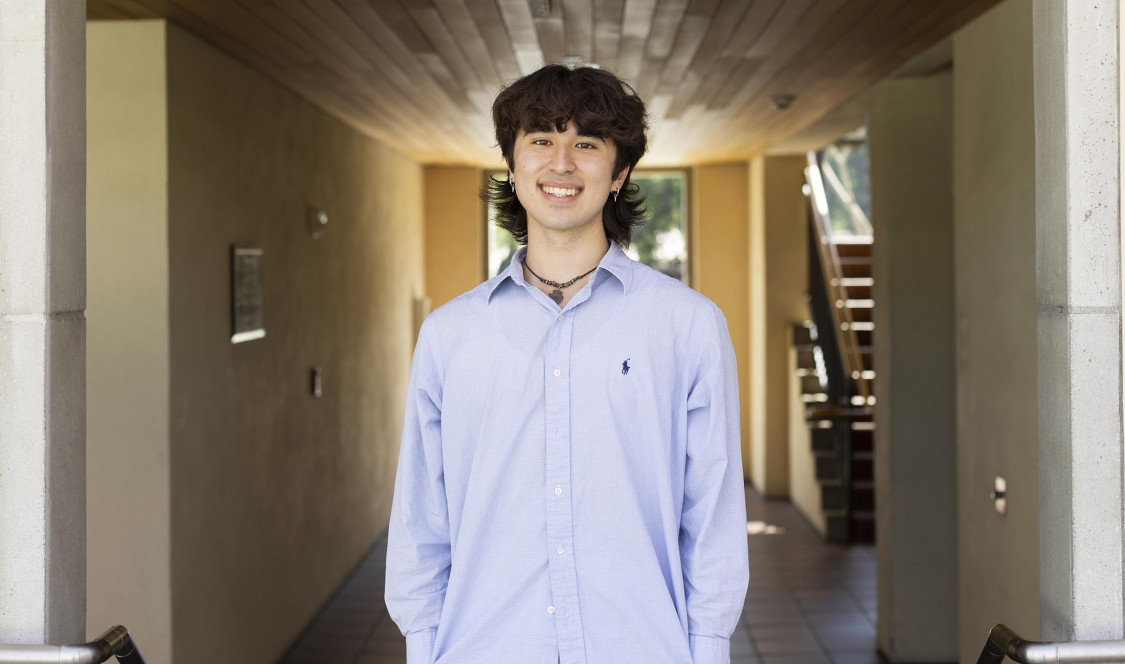
Louis Layman ’26 has a strong sense of his capabilities, having simultaneously overcome a formidable personal challenge while building an impressive list of accomplishments at Claremont McKenna College. But more important to Layman than knowing his capacity for success is not knowing where and how far it will take him.
“If you had told me when I came to CMC that this is where I’d be, I would have been shocked,” Layman said. “But that’s the feeling that I’m always trying to induce with the opportunities I take on. A year from now, or any amount of time from now, I want to feel shocked by where I’m at.”
Where he’s at, as a senior about to graduate, is miles away from his CMC beginnings.
During spring semester of his first year, Layman took a leave of absence to complete a 90-day inpatient substance-abuse rehabilitation program. With unwavering support from the Dean of Students office and Scholar Community staff at the Soll Center for Student Opportunity, a strong resolve, and what he called “a bit of the eager CMC in me,” Layman returned to CMC his sophomore fall … and thrived.
“My transformation is just one big surprise,” he reflected. “I’m full of gratitude for everyone who helped me get here.”
Of vital significance to Layman after resuming his CMC journey, this time clean and sober, was an embracing campus community. He had envisioned being “a hermit, or sort of socially dislocated and under the radar.” But instead, “I’ve found myself very much in community at all times, and that’s a great feeling and also surprising, because I thought I would need to just put my head down and get my degree.”
Holding his head very much up, Layman got busy with a new resolve to pursue service as his life’s work, especially for those in circumstances akin to his own.
“After leaving treatment, many people go on to work in the recovery space. I wanted to do something similar, so my question became, ‘how can I do this as a college student?’”
To answer this question, Layman started by “rebuilding my academic ambitions from scratch,” aligning his studies with his lived experience. Originally an International Relations major, he switched to Philosophy, Politics, and Economics (PPE), recognizing that “there was something philosophical, political, and economic about addiction and recovery.”
With support from CMC’s Fellowship Office, Layman found a solid inroad to research in his intended field by securing the 5C Mellon Mays Undergraduate Fellowship (MMUF), which supports students at The Claremont Colleges pursuing doctoral programs in the humanities or humanistic social sciences.
“It was transformative, because they introduced me to opportunities that helped me crystallize what public service was going to look like for me and how to shape that into a serviceable research project,” said Layman, who recently committed to a Ph.D. program in sociocultural anthropology at New York University.
His research, which his senior thesis builds upon, analyzes how peer recovery groups, such as Alcoholics Anonymous, shape people’s identities, relationships, political orientations, and religious beliefs.
Further pursuing his interests, Layman completed three on-topic internships: Smart Approaches to Marijuana, “where I was in federal affairs and saw all the workings of marijuana policy on Capitol Hill”; Drug Policy Alliance; and HIPS (Honoring Individual Power and Strength), a D.C.-based organization that, among other services, provides harm-reduction options to drug users.
Working with faculty mentor Michael Fortner, the Pamela B. Gann Associate Professor of Government and George R. Roberts Fellow, Layman also participated in the Humanities Lab project, “Drugs and the American Experience,” through the Gould Center for Humanistic Studies.
“We unearthed and discussed—but never came to an answer about—the ‘drug problem’ in the United States, eventually making a multimedia film. It was such a valuable experience,” said Layman.
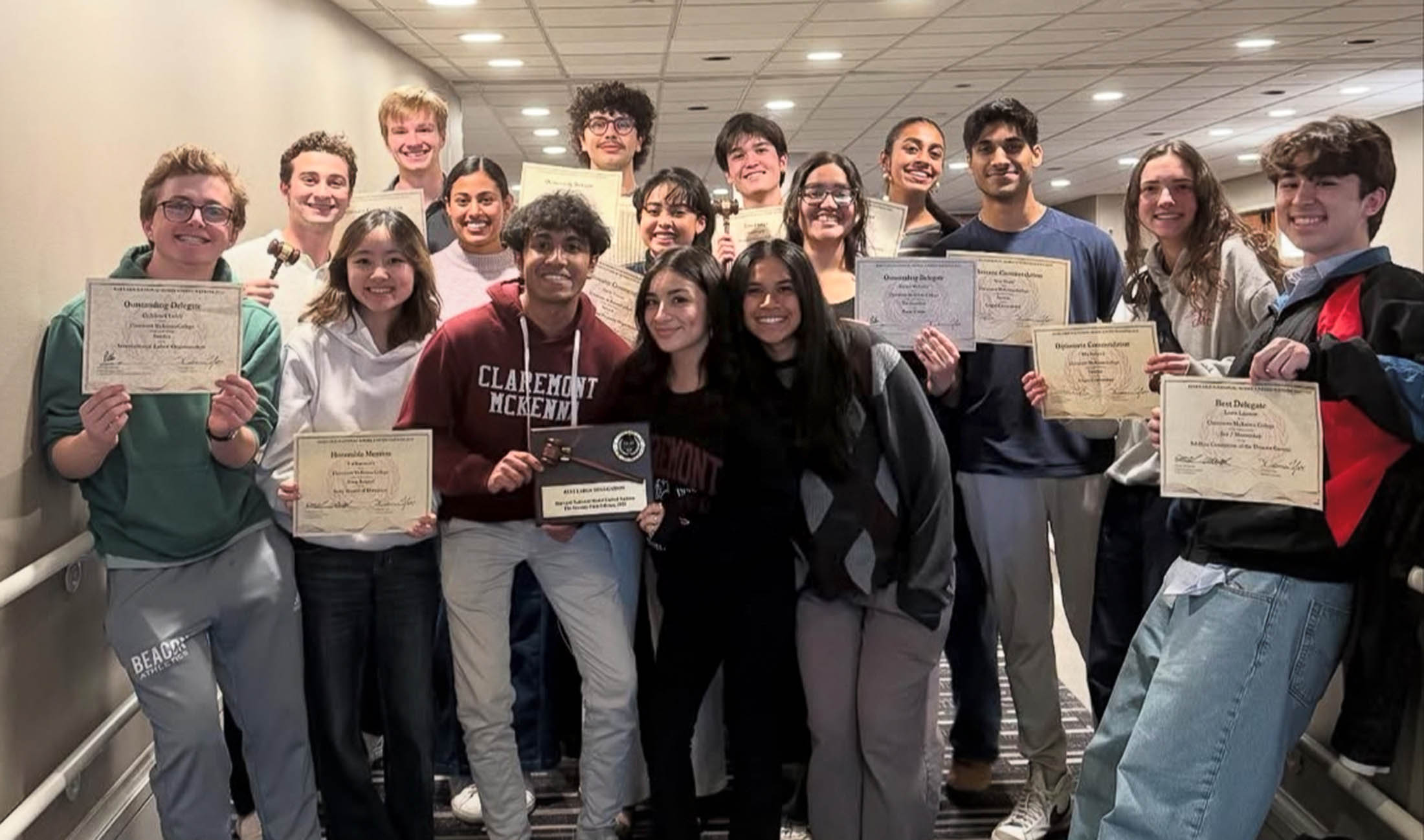
Beyond academics, Layman, a Wagener Family Global Scholar, has excelled as a Claremont Colleges Debate Union Fellow, a leader in CMC Model United Nations, and as a lead mentor in the Asian Pacific American Mentoring (APAM) program. APAM, he said, was a particularly crucial landing spot after rehabilitation, and one that revealed his inclination to lead and serve.
“It was a space where I could give back and focus on service … One of my favorite things is seeing APAM mentees become mentors, and all the ways we make a real impact.”
As time goes on, Layman’s impact will endure through the Claremont Recovery Collective, a 5C organization he helped establish to provide a safe and anonymous space for students who are “seeking recovery from drug/alcohol addiction, sober-curious, or trying to cut down on substance usage.”
“I relish opportunities to work with people and serve the community, and CMC puts its students in great positions to do that and do it in their own way,” he said.
His own way means complete openness about his experience, from rock bottom to reinvention.
“One of the things that I care about in my public service journey is making my recovery visible so that other people see that and think I can also talk about it openly and give myself that space.”
Layman’s CMC journey didn’t unfold as he once imagined, but it’s been everything it was meant to be.
“As I wrap up my time here, I have a profound feeling that I did everything I wanted to do, and everything I could do.”