
VOICES of CARE
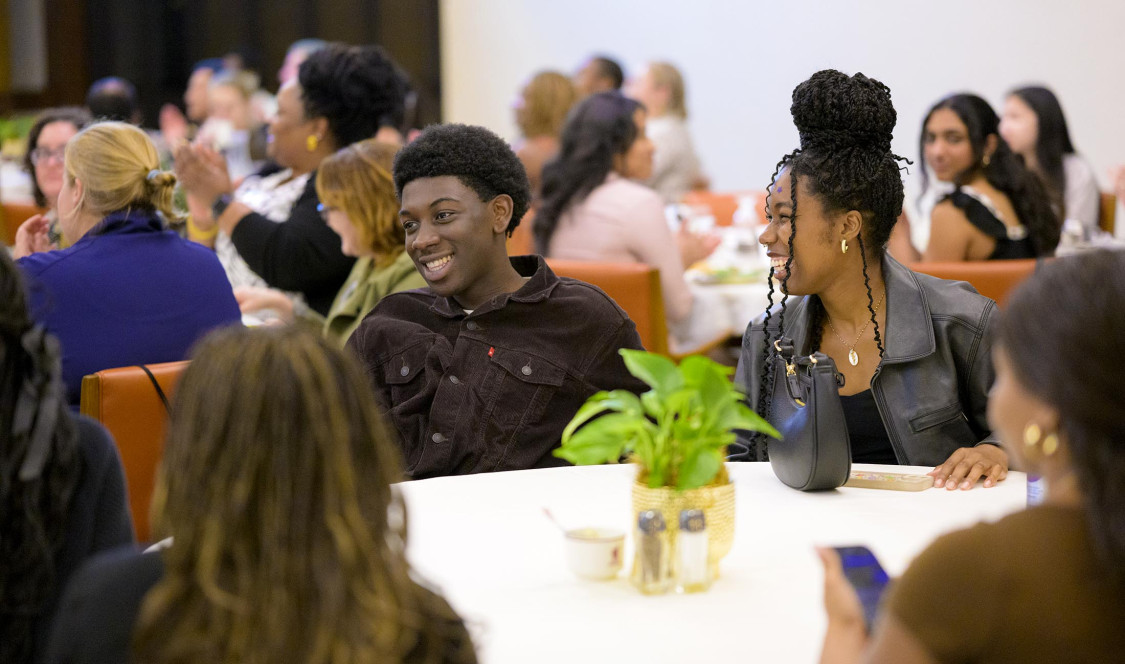
“When I first stepped into the CARE space, I noticed the wall of flags, especially the Ghanaian flag. I’m Ghanaian, so when I saw that I was like, ‘Oh my God, finally somewhere that has a representation of who I am!’”
—Jordan Baffour ’26, CARE Fellow
“CARE has really helped me in classes. I’m a PPE major, and I’ve taken a lot of Government classes, so it can be difficult to talk about things that are very real to you, and pertinent to you, and emotional for you. CARE has given me the confidence and the skills to be able to have those conversations.”
—Gabe Corleto ’28, CARE Fellow
“Being a CARE Fellow, and having a community within CARE, has definitely made me realize how far I can go and how far I still have to go.”
—Jennifer Florencio ’26, CARE Fellow Lead
“When I became a CARE Fellow and started going to more CARE events, I was trying to really figure out what was at the core of the center and its mission. And I realized that it was dialogue, it was discourse. To be in a room full of people who think a different way, whether it’s a complete opposite way or maybe just slightly deviating from what I think … that’s something incredibly valuable.”
—Evelyn Montoya ’27, CARE Fellow
“CARE has shown me the importance of good leadership and good organization—especially within yourself.”
—Alexandra (Aley) Umegboh ’26, CARE Fellow Lead
—Compiled by Tristen Tate ’26
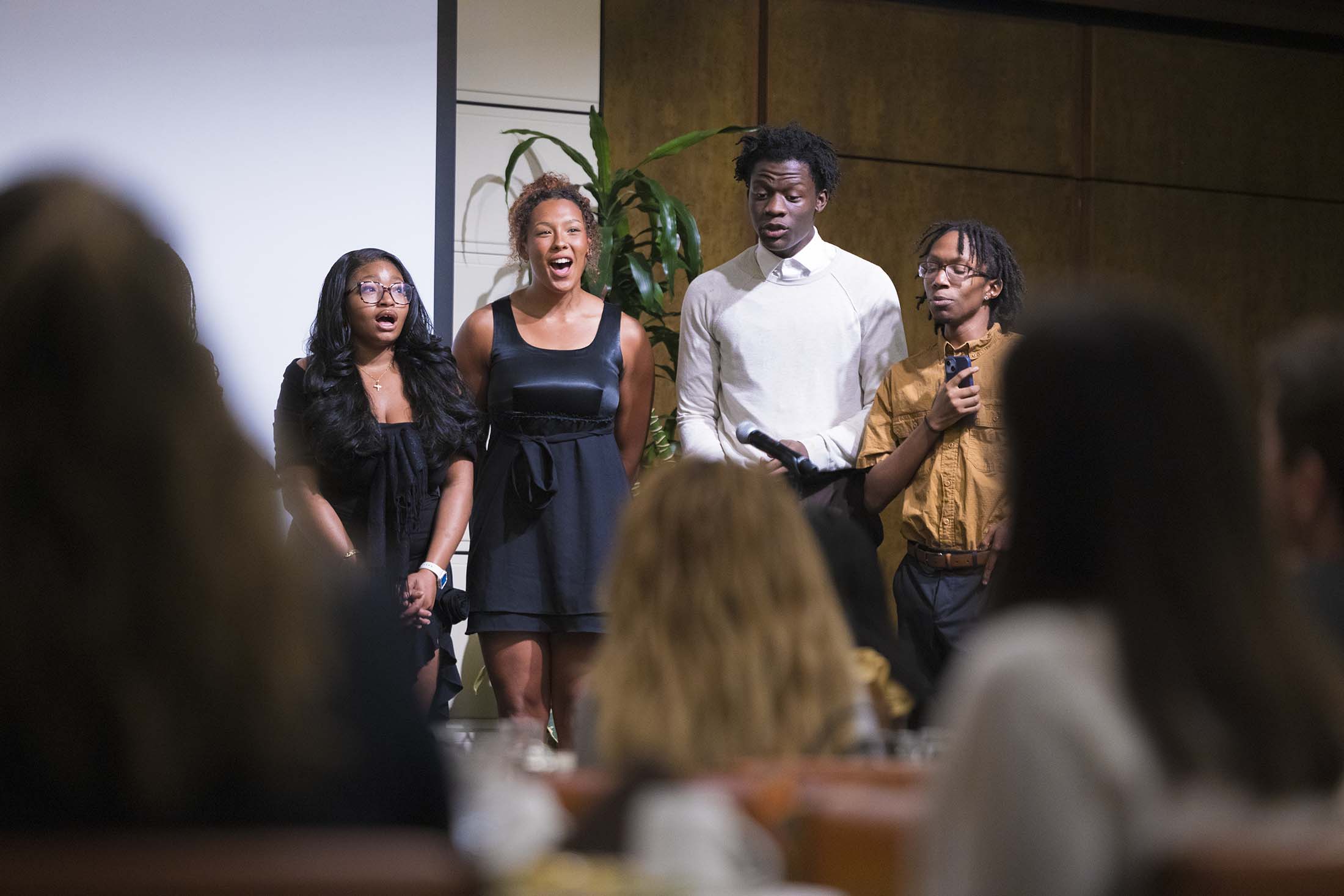
The Earth Tones, a 5-C a cappella group, literally set the tone for the CARE Center’s 10th anniversary celebration with an exhilarating medley of songs, culminating with “Stand By Me,” whose lyrics illuminated the evening’s inspiring theme.
For 10 years, CARE Center staff and student fellows have provided CMC students not only with a warm, supportive haven, but also resources and services that deepen student engagement, stimulate leadership development, and foster constructive dialogue.
Throughout the March 4 celebration at the Marian Miner Cook Athenaeum, key voices from the CARE Center’s history reflected on the center’s evolution, as well as on the resounding impact their collaborative work sustains today across the CMC community.
Nyree Gray, Vice President for Human Relations and Chief Civil Rights Officer, and Vince Greer, Assistant Vice President of Student Affairs for Dialogue and Diversity, jointly welcomed the audience who included alumni, current students, faculty, and staff, as well as President Hiram Chodosh, Priya Junnar, and Jil Stark ’58 GP’11.
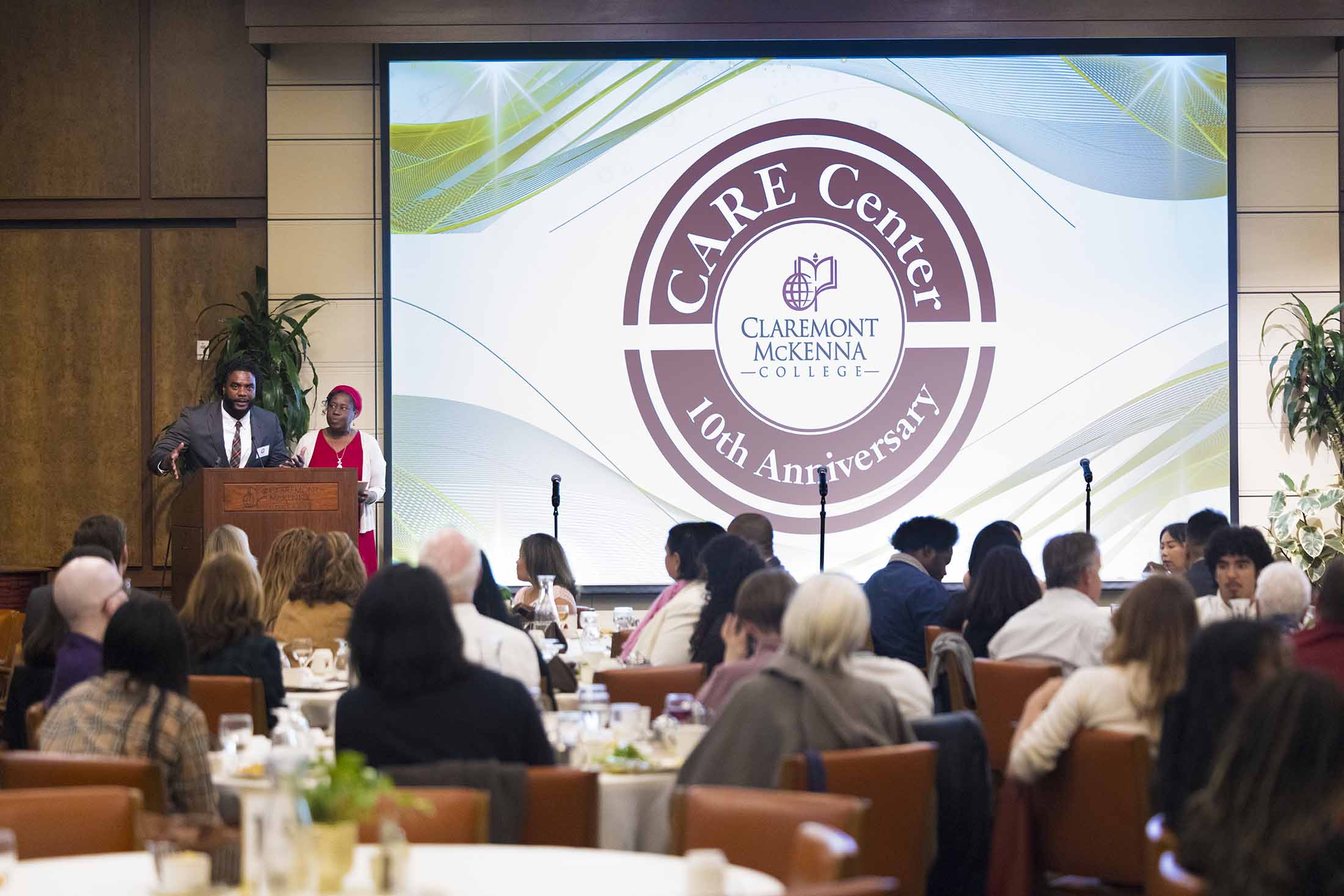
Greer, who joined CMC in July 2016 to lead the CARE Center—an acronym of Civility, Access, Resources, and Expression—as its inaugural director, acknowledged that students are “the heartbeat of the CARE Center. He further emphasized “that heartbeat starts with our CARE Fellows”—the students who support the Center’s daily operations, and lead events and programs to advance its mission.
In an interview before the event, Greer emphasized that a core objective of CARE Center programming is to encourage student success anchored in responsible leadership and constructive dialogue.
“One of the layers to being a responsible leader is how we understand others,” Greer said. “How do we engage across difference? The goal is never about consensus building. It’s not about group thought. But it is about a level of compassion and respect. I should hopefully be able to enter a room, and no matter how passionate I am, how deeply entrenched in my thoughts and values, I’m able to see where somebody else is coming from, even if it’s not my cup of tea. That’s always been a goal for us: to create space for folks to learn and better understand one another.”
Another way that CARE furthers student success is by providing access and removing barriers to resources. Students can borrow books they may need for class through the textbook loan program, and consult with mental health counselors and academic advisors within the CARE space.
Current CARE Fellows Sophia Castellanos ’26 and Isabela Cabrera ’27 shared how they found their voices at CMC thanks to CARE’s student-first staff and resources. “CARE will always be willing to evolve because it remains steadfast to its core principles of being student-centered, open to all, and evidence-based. These elements ensure that no matter what is happening in the world … the Center will forever evolve to meet the current needs of the CMC community,” added Cabrera.
One of the first CARE Fellows, Isaiah Tulanda ’20, offered insights into the Center’s early days. During his time at CMC, he described “a developing appetite on campus for student-centered spaces that focused on consistent opportunities for dialogue—less formal than the Athenaeum, and less formal than the classroom.”
“The students at CMC … are some of the most brilliant minds that I will ever meet. There had to be a space to feed that intellectual curiosity and appetite,” said Tulanda, who now works at the College as a multimedia manager. “It’s easier to develop into who you are becoming—and maybe meant to be or want to be—when you're surrounded by people who want to see you be your best.”
Gray paid “special tribute” to former CMC Trustee Rey Ramsey, author of the upcoming book, The Tyranny of False Choices: A Guide to Authentic Decision-Making. Over the past decade, Gray said Ramsey “has given to CARE in such an impactful and dedicated way ... and has given us the opportunity to do programming that we would not have otherwise.”
The evening also celebrated President Chodosh’s role in CARE’s origins, which Gray described as “salient from the beginning.” She recalled first discussing CARE as a concept at Hiram and Priya’s dinner table, noting that when she thinks about “the space today and the things that people talk about, they all anchor back into those small, intimate conversations.”
Additionally, Greer noted that as CARE evolves, President Chodosh “has always been aligned in the many ways we envision the space being … and how it serves a very distinct purpose that’s needed in the community.”
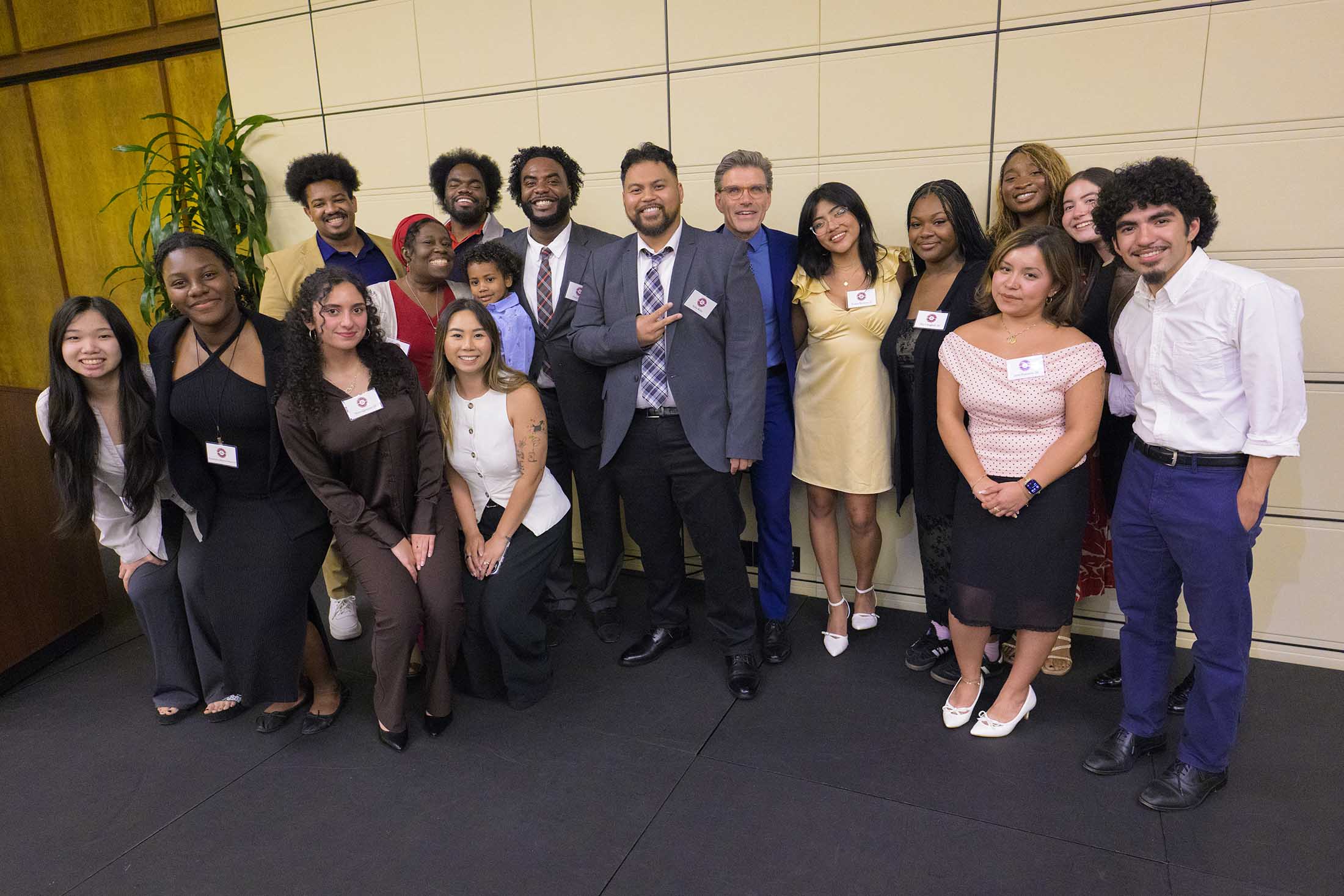
In his closing remarks, President Chodosh tied the success of CARE to the work and contributions of so many in attendance at the Ath, most notably, past and present CARE Fellows, staff at the Dean of Students office, and supporting faculty. He described how CARE’s origins sprang from several key questions: “What is the community that we want to create? What do we want to exemplify for the rest of society? And what are the experiences, skills, and ethos that are going to get us there?”
He then challenged the audience “to ask the same questions—what are we trying to build together? Not just the creation and strengthening of identity when it’s been repressed, not just the creation of our own sense of controlling our own fate, but being able to cross-identify with others whom we’ve ever met, or never met.”
President Chodosh also acknowledged that while there will always be new challenges to navigate in the world, there is so much to celebrate and be proud of at CMC thanks to the CARE Center as a powerful example of openness and curiosity.
He quoted from the national press recognizing CMC for its programming: In a time when many institutions retreat into partisan bunkers or ivory towers, Claremont McKenna is quietly building a new kind of academic community, one that invites more voices in, asks the hard questions, and prepares students to live in a fractured world. President Chodosh concluded: “That, folks, is CARE.”