
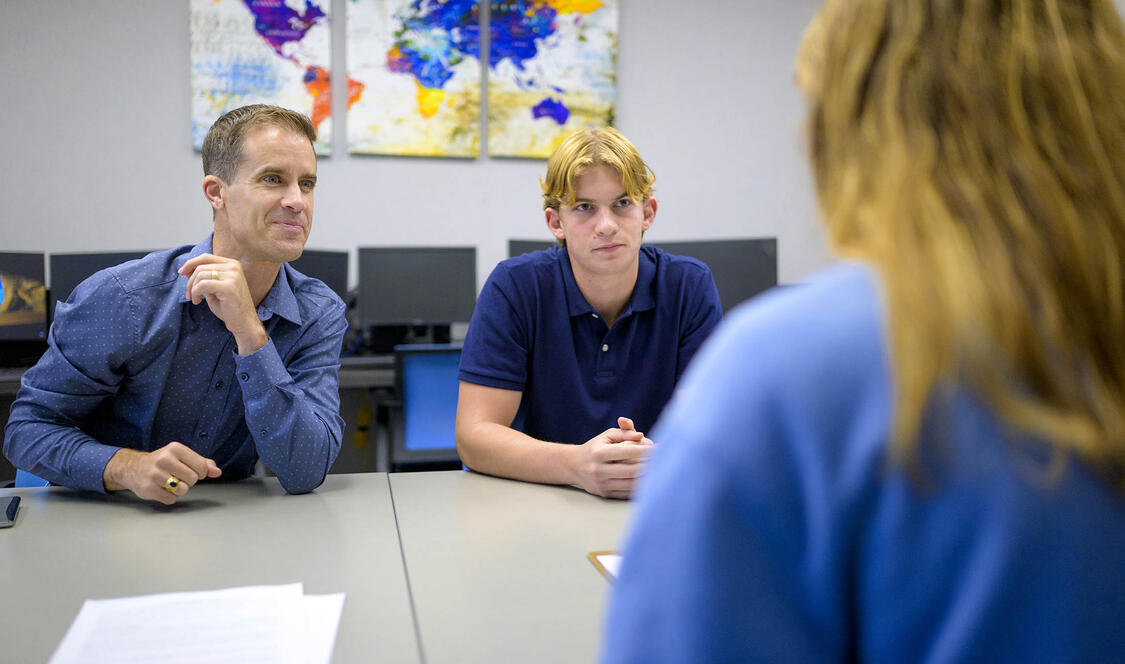
A longtime trusted think tank for government leaders and the public, CMC’s Lowe Institute of Political Economy celebrates its 40th anniversary this year.
That’s four decades of data-driven insights and analysis, regional economics forecasts, and vital work at the intersection of economics, political science, and public policy that helps others better understand the complex world we live in.
And yet, according to Cameron Shelton, the far-reaching impact of its published research is not the Lowe Institute’s biggest legacy on this milestone occasion. As director for the past 10 years, Shelton has worked to make the student research experience the heart of the Institute’s identity.
“What I’ve been really focused on is the ultra-curricular experience for the students—the deepening of their learning and understanding, and moving their textbook knowledge of economics toward practical, open-ended problem solving,” said Shelton, the McMahon Family Professor of Political Economy.
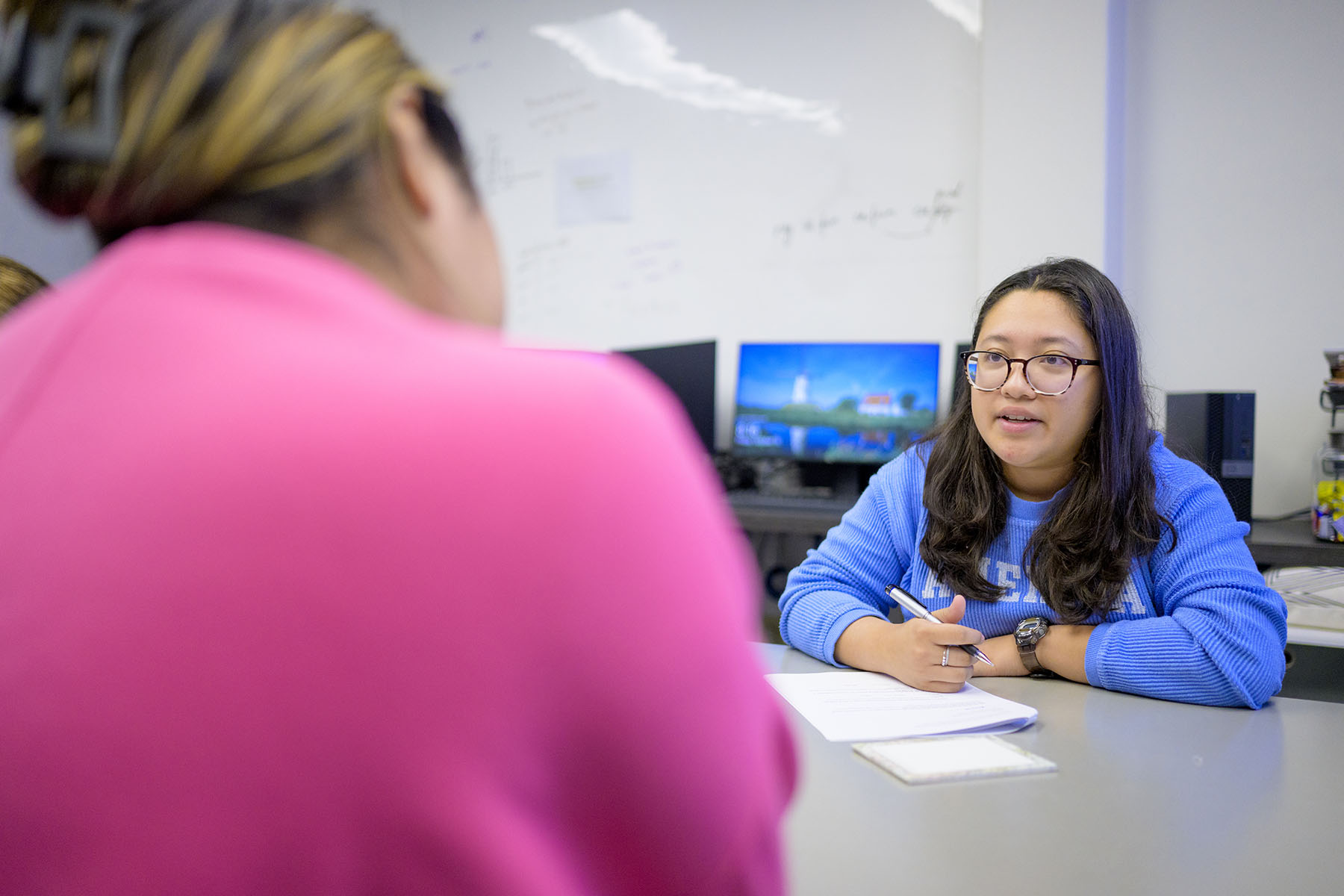
Students involved in the Lowe Institute—typically 40 or 50 each year—collaborate in teams and work closely with faculty members. After formulating a data-driven research question, they design a quantitative study, gather and clean data, analyze that data, and determine how the findings apply to real-world decisions or policy. Just as important, they learn to effectively communicate their findings and public policy recommendations in peer-reviewed publications and at academic conferences around the world.
Students can work specifically on questions of public policy interest to California or join one of three standing faculty-led groups—the Inland Empire Economic Forecast and Analysis group, the Fed Challenge Team, or the new Experimental Economics Lab.
“What students experience at the Lowe Institute is a fantastic bridge to life after CMC,” said Shelton. “When I talk to employers who love CMC students, I ask them, ‘What do you look for in a graduate?’ They certainly value what our students learn in the classroom, but what really distinguishes our graduates is their ability to take that knowledge and use it to solve open-ended problems. The Institute gives students exactly those experiences.”
Mentorship that matters
Economics and Mathematics major Armine Kardashyan ’26 found the Lowe Institute to be “an intellectual and social home.” As a rising sophomore, Kardashyan became a part of the Data Journalism team—which she eventually led—and launched a series of Lowe Salons to advance faculty-student discussion about the Institute’s work.
“The Lowe Institute, simply put, was the most formative part of my experience at CMC and one of the major reasons I applied to the College,” said Kardashyan, who plans to pursue a Ph.D. in political economy and become a specialist in international and comparative political economy. “To me, the Lowe brought together the best parts of CMC: It combined close mentorship with the belief that undergraduates could produce work that mattered beyond the classroom.”
Kardashyan experienced how explicitly the Institute embodies CMC’s leadership values and the core commitments of The Open Academy: freedom of expression, viewpoint diversity, and constructive dialogue.
“CMC prepares students for thoughtful and productive lives and responsible leadership, and the Lowe Institute made those ideals tangible for me,” she said. “Leadership was never simply a title. It meant being trusted with real responsibility and recognizing that your work affected the people around you. Professor Shelton and [Assistant Director] Minjae Yun took our ideas seriously while still pushing us to think more carefully and to be honest about what the evidence could support.”
Because she felt “supported, challenged, and understood,” Kardashyan developed the confidence to voice uncertain ideas and navigate difficult conversations, skills that proved valuable at academic conferences as far away as the Netherlands.
“The Lowe Institute taught me that research develops through exchange and that criticism can be an invitation to see a problem differently,” she said. “The conversations I encountered at the conferences felt like an extension of the intellectual environment I had first found at the Lowe.”
Anniversary reflections
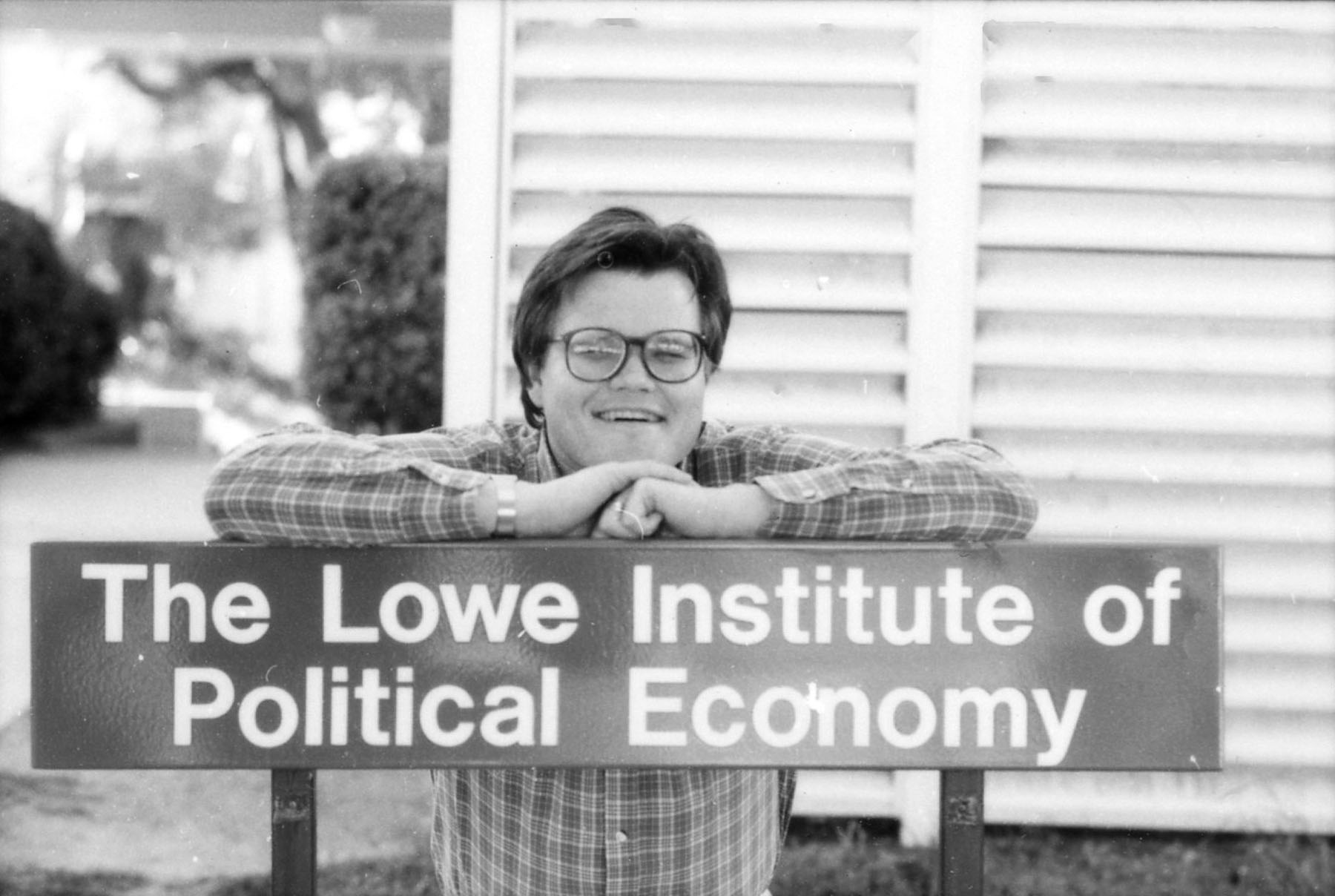
The Lowe Institute came into being in 1986 when then-President Jack Stark ’57 GP’11 partnered with Thomas Lowe P’56 P’62 GP’08 to establish a center dedicated to economics. Continuing the family leadership, son Robert “Bob” Lowe ’62 stepped up to lead the Institute financially and operationally, and still chairs the Board of Governors today.
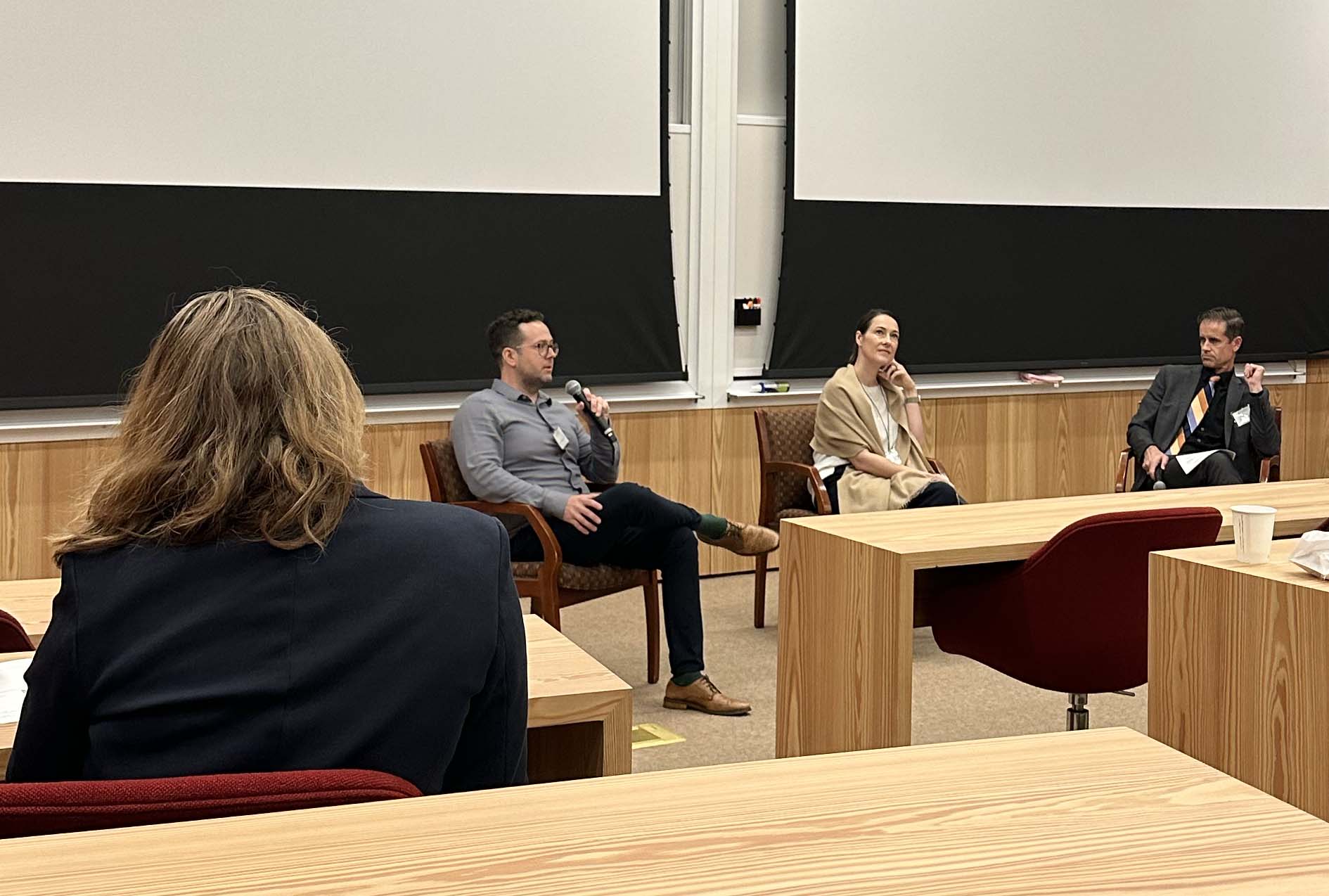
In mid-September, the Lowe Institute’s 40th Anniversary Symposium brought together faculty, alumni, students, staff, and the Board of Governors to reflect on four decades of scholarship. A keynote conversation at the Athenaeum with James M. Anderson, director of the RAND Institute for Civil Justice and a senior behavioral scientist at RAND, on “How Research Informs Policy” kicked off the two-day event. Day two in the Robert Day Sciences Center featured an alumni panel on the Lowe Institute’s influence on careers, scholarship, and public service.
Panelist Joseph Matt ’99, principal of Matt Advisory Services LLC, was a student researcher at the Lowe Institute in the ’90s when Sven Arndt was director. Eighteen years ago, Arndt invited Matt to join the Board.
“I believe the institutes are one of the most distinctive things about CMC. Students usually have to make this tradeoff between small class sizes and liberal arts education and what large institutions give you: access to applied research opportunities with professors. CMC’s institutes give students access to all of that,” Matt said.
He further credits his experience at the Lowe Institute for setting the course for his career, including landing his first job as a management consultant with McKinsey & Company. So influential was his time as a Lowe Institute student manager—he was among the very first—Matt later endowed the position and named it after his mentor: the Arndt Student Managers fund.
“I’m confident that the best is still to come for the Institute,” Matt said. “We’ve broadened the scope of our research to serve the entire Economics department, we’re doing a lot in data analytics, we’re serving more students and professors than ever, and I think what Cameron’s done to establish a culture and make it a destination where students want to work puts us in great stead for the future.
“Cameron and Bob’s vision has really come to fruition,” he added, “and I look forward to the next 40 years.”
Shelton said the most gratifying part of the anniversary was hearing alumni across generations describe what stayed with them from their time at the Lowe Institute.
“The projects and technologies have changed enormously over 40 years, but the essential experience hasn’t: students working closely with faculty, taking responsibility for difficult questions, and learning how to guide inquiry when there isn’t an answer in the back of the book,” he said. “That’s the tradition we want to carry into the next 40 years.”