
Humans are messy. The world, even messier—especially when difference becomes division.
But leaning into the mess with openness, curiosity, and authenticity is the college experience Dhriti Jagadish ’27 always hoped to find at CMC, even if the solutions to big societal challenges still feel out of reach to her.
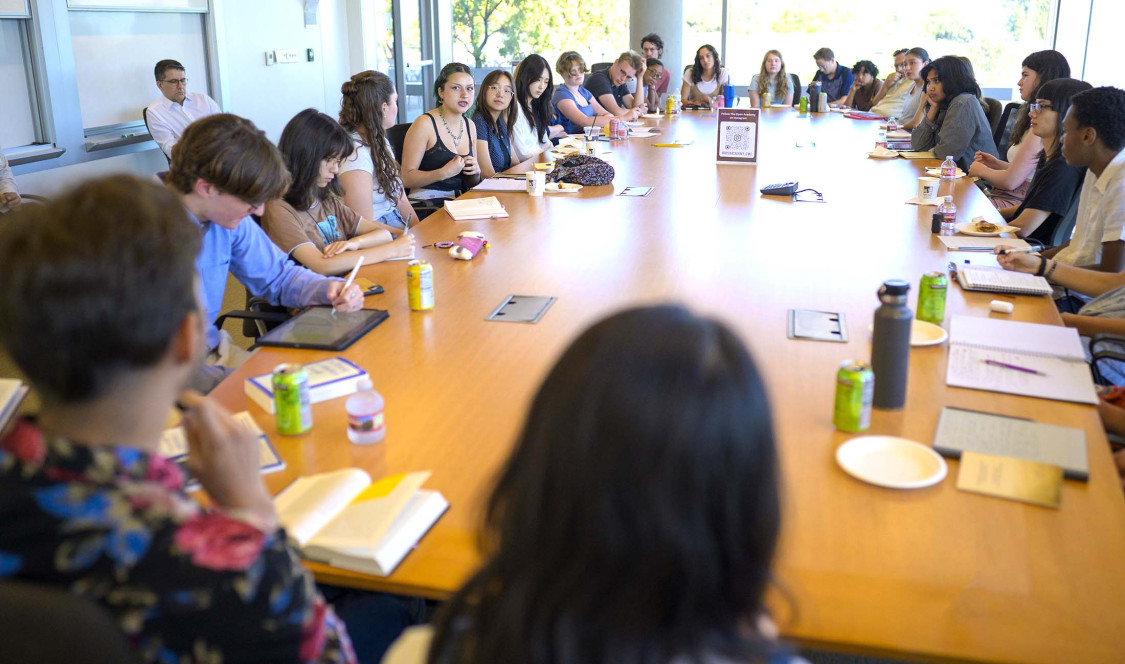
Admittedly, that last part is OK with Jagadish as long as an intentional effort to understand complex problems and people is accessible through deeper learning, engagement, and constructive dialogue. Her conclusion sums up the valuable experiences she has discovered through CMC’s Open Academy, first as a student attendee of programs at the Athenaeum or Saturday Salons, and for the past two years, as a program assistant who helps plan and facilitate conversations alongside faculty advisors.
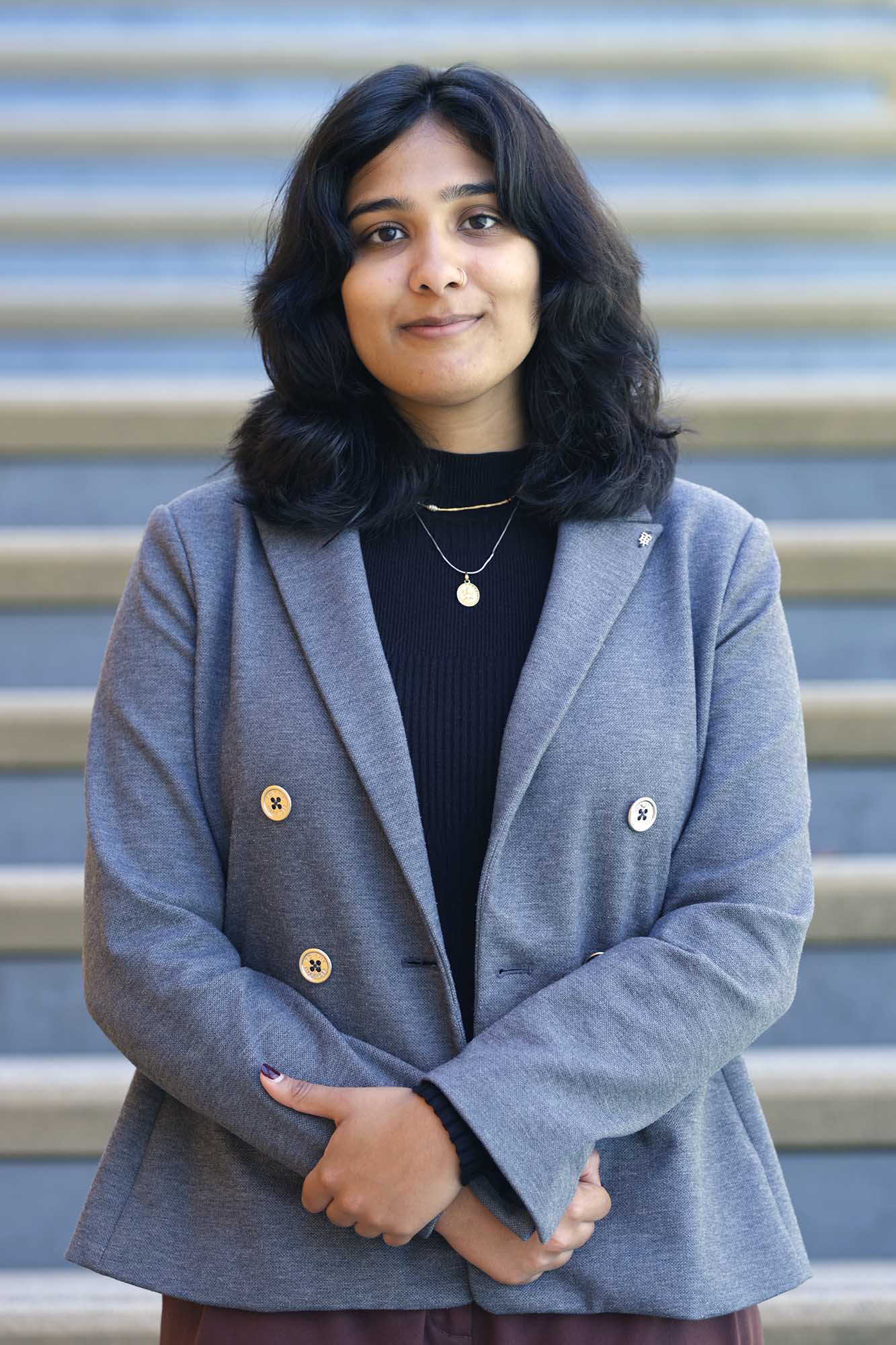
“I’ve realized through The Open Academy that building and constructing my viewpoints is a very iterative process. I can’t just stack myself into one box or another, because there are things I disagree with that aren’t aligned with the two political poles we’ve constructed for ourselves in the United States,” said Jagadish, a Government major who serves as an editor of the Salvatori Center’s Forum, a staff writer for the Claremont Independent, and was most recently published in Persuasion, a national publication.
“So, I constantly find myself through Open Academy programs and events asking, ‘What have I come away with here? And where do I want to go next?’ It becomes a very animating spark that keeps pushing you to learn more.”
When The Open Academy formally began at CMC in 2018, President Hiram Chodosh cited several “formidable factors” responsible for pulling people apart, whether on college campuses or at the family dinner table. Yet even as growing polarization and distrust had a chilling impact on free expression and the ability to talk and listen actively through the widest range of diverse viewpoints, President Chodosh believed CMC’s mission-based learning community was “strongly equipped to understand and face these forces, not just complain about them … to provide insight on the underlying changes that appear to be driving our divisions … and create and sustain, through our leading example, an open, resilient academic and social environment that is capable of engaging honestly and thoughtfully in the great controversies of our moment.”
Together with President Chodosh, CMC’s Board of Trustees, and the Dean of the Faculty’s office, Professors Jon Shields (Government) and Heather Ferguson (History) helped magnify Open Academy principles, programs, and outreach as inaugural co-directors starting in 2022—bolstering what Ferguson called “the true work of a liberal arts college experience … not the tests, papers, problem sets, and projects, but rather the willingness to open up to new modes of understanding each other and the world around us.”
Upon assuming the director’s role last year, Professor Ioannis D. Evrigenis (Government) has continued to push students to forge unique cross-disciplinary connections by appointing Open Academy students to dual roles in CMC institutes and centers, while also building upon foundational partnerships with the Dean of Students' office, Kravis Lab for Civic Leadership, and Athenaeum, among others, particularly on thematic programming related to the Declaration of Independence and its 250th Anniversary this July.
Guided by intentionality from the start, The Open Academy’s impact has been both immediate and widespread. In 2019, CMC received the Heterodox Academy’s Institutional Excellence Award as “the college or university that has done the most to advance or sustain open inquiry, viewpoint diversity, and constructive disagreement either on its campus or nationally.” The College has further honed its national reputation with consistently strong rankings in related areas of constructive dialogue and leadership development, including two No. 1 free speech distinctions from the Foundation for Individual Rights and Expression (FIRE) in 2021 and 2026 (the first college to do so), as well as top marks that seem almost counterintuitive in modern times (No. 1 friendliest students and No. 2 most politically active students) in Princeton Review surveys.
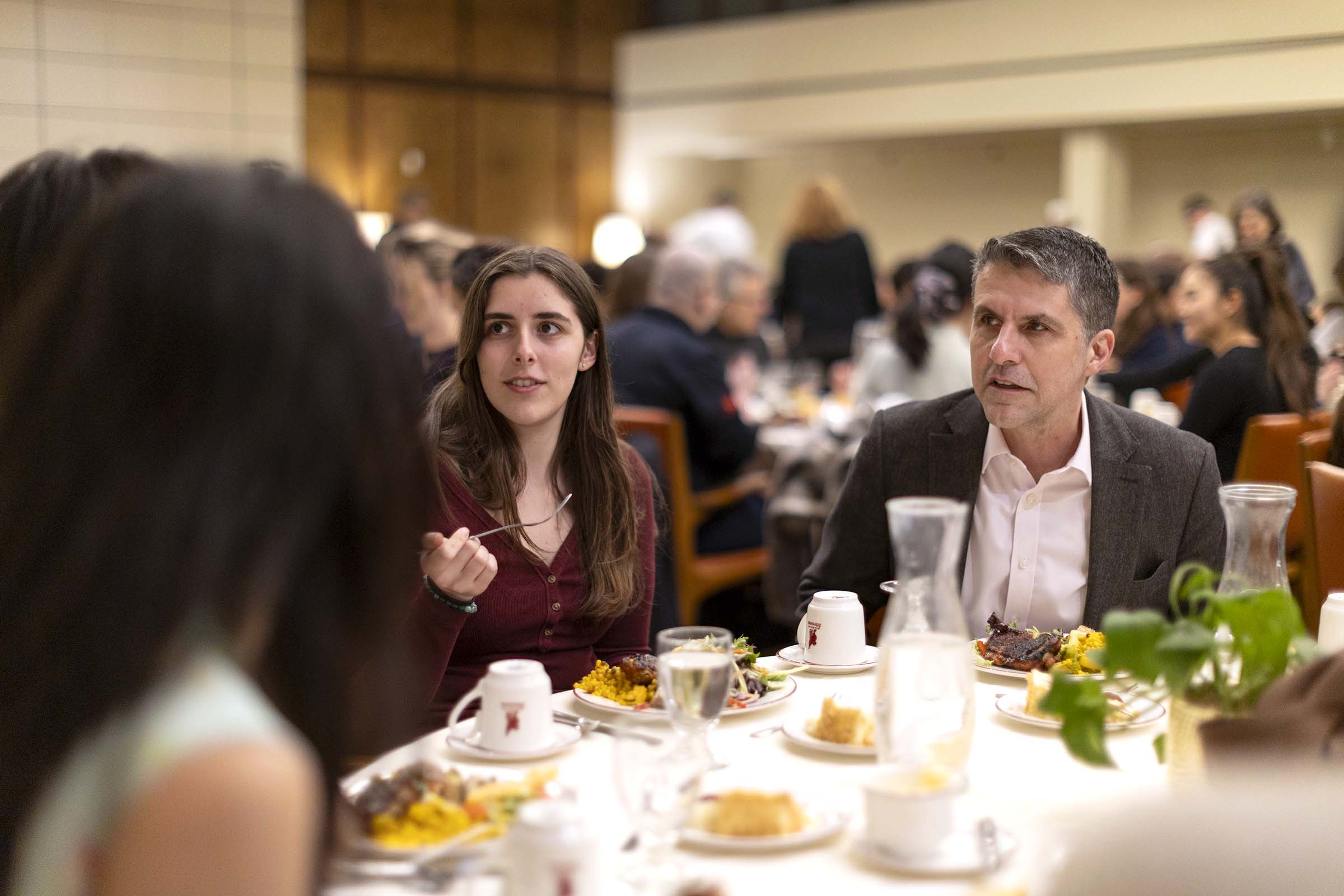
To add further validation to how much The Open Academy has fundamentally enhanced CMC’s campus culture, late last year, the U.S. Department of Education awarded a $2.4 million grant* that will enable CMC to sustain and expand Open Academy efforts locally and across the country. Awarded through a highly competitive process administered by the department’s Fund for the Improvement of Postsecondary Education—Special Projects (FIPSE-SP), the four-year grant, spanning 2026-2029, allows The Open Academy to “build on initiatives that have existed at CMC for some time, and continue to bring them together in a systematic way,” said Evrigenis, Alice Tweed Tuohy Professor of Government and Ethics.
“We take this award as a very strong indication that we are doing thoughtful and deliberate work in this critical area,” he added. “We’ve always approached the principles of The Open Academy comprehensively, which is different from what you see in a lot of other institutions.”
On campus, this includes programming like salons that foster intensive, small-group discussions on consequential topics; sponsored talks with leading experts at the Athenaeum; and a wealth of initiatives that engage students, faculty, staff, and alumni, including seminars, roundtables, reading groups, and film screenings; as well as focused efforts like Admission essay prompts for prospective students or Orientation trainings and first-year/sophomore class dinners that introduce Open Academy expectations. Beyond campus, Department of Education grant funds will also allow Open Academy efforts to be more significantly shared and modeled through stronger collaborations with external partners. In one such initiative, spearheaded by the Kravis Lab for Civic Leadership and in partnership with local school districts, The Open Academy will design and facilitate civil discourse training for students at Claremont High School, Pomona High School, and The Webb Schools.
“We want to make sure that students are arriving at college open to alternative viewpoints, able to have productive conversations with their instructors and peers, and not feeling as though disagreement is an attack or a reason to feel unwanted,” Evrigenis said. “We want them to feel comfortable in productive conversations and also learn to treat others with respect as they engage in those conversations.”
With other local, as well as national partners, Evrigenis said The Open Academy plans to deepen its partnership with the Jack Miller Center for Teaching America’s Founding Principles and solidify a joint venture with Claremont Graduate University to increase professional development courses and launch new workshops on topics of civil discourse for local teachers and community college faculty.
CMC will also continue co-leading the Citizen Preparation Measurement Working Group with the Institute for Citizens & Scholars (C&S) and participating in the College Presidents for Civic Preparedness, a national project where President Chodosh is a founding and leading member. In additional collaboration with C&S, The Open Academy model of civil discourse will be promoted on campuses nationwide to advance citizen development and civic learning across the country.
“CMC is among a vanguard of institutions that appreciates how developing the three essential civic skills is not simply a process of skills development; it’s an undertaking that needs to be embedded in the campus ethos and the campus culture,” said Rajiv Vinnakota, president of the Institute for Citizens & Scholars. “As part of our campuswide immersion cohort, CMC is at ‘the deep end of the pool’ to ensure that each one of its students develops motivations, skills, and social connections to engage in collaborative problem solving. This is hard work, and to do it well requires a full institutional investment in the work and in assessing the work. Both CMC and President Chodosh have been leaders in making this happen.”
Above all, the stability and future growth of The Open Academy will allow CMC to stay responsive to both the needs of its students and the increasing velocity of the world around them.
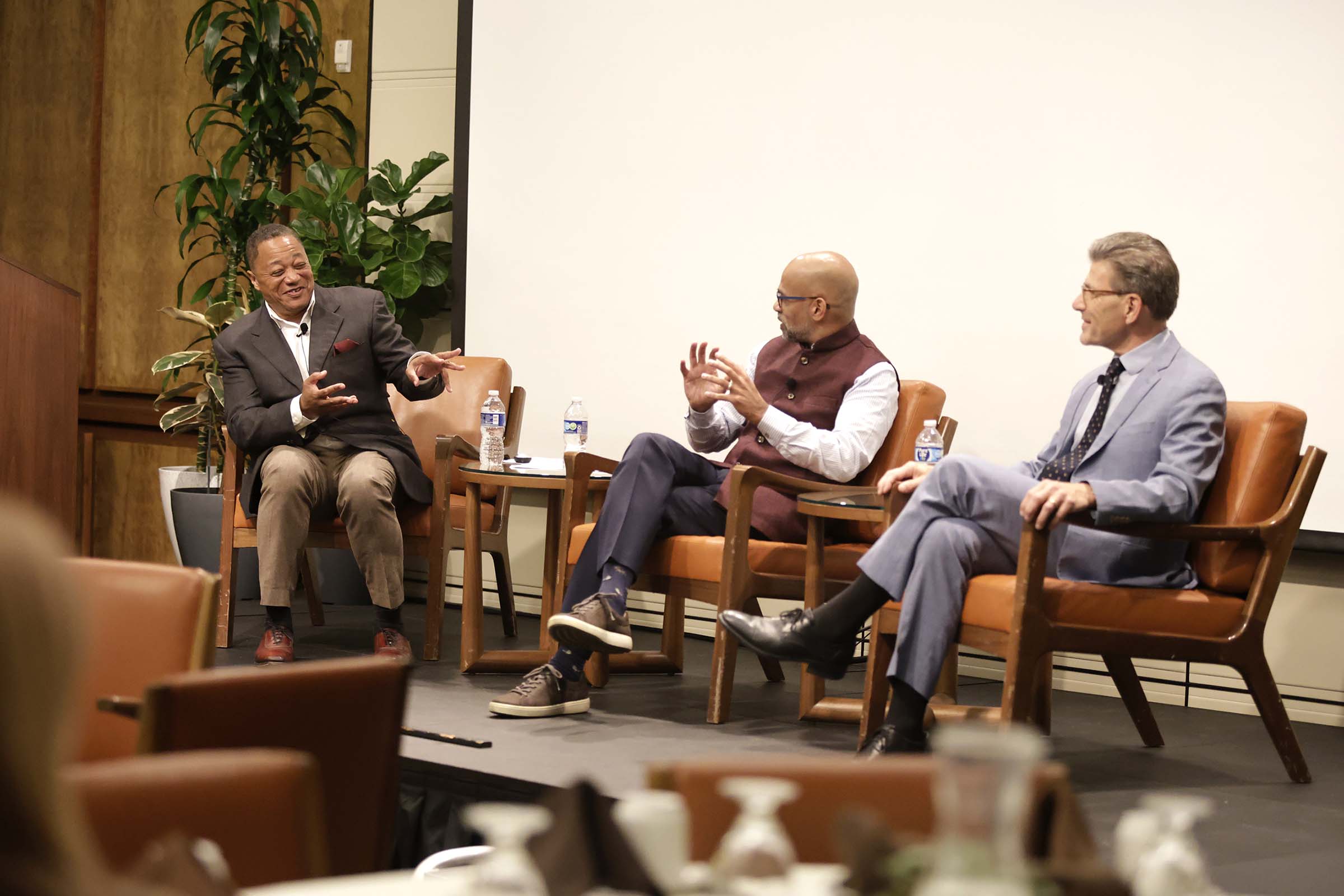
As Jagadish pointed out, already this academic year, The Open Academy has hosted meaningful, moderated discussions on prominent topics like Charlie Kirk’s assassination, U.S. military intervention in Venezuela, and most recently, the surge of Immigration and Customs Enforcement (ICE) officers in Minneapolis. These essential—perhaps even understandably charged—dialogues, she said, open up CMC students like her to thoughts, feelings, and perspectives she can’t always rely on hearing organically.
“Rather than avoiding hard issues, faculty, staff, and students create structured, serious, and human spaces for dialogue,” added Heather Antecol P’29, Vice President for Academic Affairs, Dean of the Faculty, and James G. Boswell Professor of Economics. “Being part of those conversations shows me how CMC meets tension head on, choosing engagement over silence, and modeling what it looks like to master a moment as an academic community.”
And thankfully, the engagement often doesn’t end at an advertised time. Whether over meals at a professor’s house following a Saturday Salon, or during extended conversations on the Kravis Center patio until 10 or 11 p.m., The Open Academy has reinforced “that so many important opportunities are available to students at CMC, and your academic life doesn’t just end at 12:15 p.m. with class,” Jagadish said.
“I have also learned that these opportunities are not about giving the correct, perfect, or political answer. And that’s good. Because you’re more honest. You’re raw. And yes, you may even get things wrong along the way, which I know can be intimidating around your peers. But it shouldn’t be about judging others. We’re all here to share ideas and learn together.”
*The U.S. Department of Education grant award of $2,408,560 represents 46% coverage of total program costs over four years, with the remaining 54%—or $2,840,614—financed by non-governmental sources.