Marian Miner Cook
Athenaeum

A distinctive
feature of social and
cultural life at CMC


Welcome to The Athenaeum

Unique in American higher education, the Marian Miner Cook Athenaeum (the “Ath”) is a signature program of Claremont McKenna College. Four nights a week during the school year, the Ath brings scholars, public figures, thought leaders, artists, and innovators to engage with the CMC and Claremont College community. In addition, the Ath also hosts lunch speakers, roundtables, and smaller presentations in its two auxiliary dining rooms.

For decades, the Ath has hosted a spectrum of luminaries with expertise and insight on a wide range of topics, both historical and contemporary. In the Ath’s intimate yet stimulating setting, students, faculty, staff, and other community members gather to hear the speaker, pose questions, and to build community and exchange ideas over a shared meal.

At the core of the Ath is a longstanding commitment to student growth and learning. Central to the Ath are its student fellows, selected annually to host, introduce, and moderate discussion with the featured speaker. Priority is given to students in attendance during the question-and-answer session following every presentation. Moreover, speakers often take extra time to visit a class, meet with student interest groups, or give an interview to the student press and podcast team.

Mon, March 30, 2026
Lunch Program
Neha Dixit

Some lives exist only in files, headlines, or accusations. How do paperwork, policing, and media narratives quietly decide who belongs? What does democracy look like from below? Drawing on her book 'The Many Lives of Syeda X', journalist Neha Dixit will explore how journalism can recover erased histories, expose routine violence, and hold power to account. It examines media influence, gendered surveillance, majoritarian politics, and the slow erosion of democratic rights in contemporary South Asia. Furthermore she will highlight the struggles of urban poor workers, precarious labour, and income inequality, showing how economic marginalization intersects with political and social exclusion and will reflect on the hidden struggles and the everyday realities of citizens caught in the machinery of the modern state, amid shrinking media freedom and democratic backsliding.

Read more about the speaker

Neha Dixit is an independent journalist and author based in New Delhi. For over two decades, she has reported on politics, gender, labour, and social justice in South Asia, producing investigative, narrative, and long-form journalism for Al Jazeera, The Washington Post, The New York Times, Caravan, The Wire, and others. 

Her work has exposed extrajudicial killings, hate crimes, human trafficking, unethical clinical trials, and sectarian majoritarian violence. She has won over a dozen national and international awards, including the International Press Freedom Award (2019) from Committee to Protect Journalists, the Chameli Devi Jain Award (2017), and the Lorenzo Natali Prize for Journalism (2011).

Her book, "The Many Lives of Syeda X" (Juggernaut), traces 30 years in the life of a migrant Muslim woman navigating Delhi’s informal labour economy, holding over 50 jobs without minimum wage. The book, a vivid portrait of urban India’s invisible workforce, was named Book of the Year 2024 by The Hindu and the Deccan Herald among others. It won the Ramnath Goenka Sahitya Samman and Kalinga Best Debut Award and a Special Jury Mention by the CG Moore Prize for Human Rights Writing.

Ms. Dixit's Athenaeum presentation is co-sponsored by President's Leadership Fund. 

Read less
Mon, March 30, 2026
Dinner Program
Robert Long

When people worry about AI, they usually worry about what AI might do to us. But what about what we might do to AI? Robert Long, a philosopher who works on AI consciousness and welfare, and the Executive Director of Eleos AI Research, will explore what consciousness might look like in artificial systems. Drawing on philosophy of mind and the science of consciousness, he asks what happens when our best theories are applied to the AI systems of the near future. Given the rapid pace of AI development, he argues, we can't afford to wait for certainty — and philosophy, cognitive science, and neuroscience can help us act wisely in the meantime.

Read more about the speaker

Rob is a researcher on AI consciousness and welfare, working at the intersection of philosophy of mind, cognitive science, and the ethics of AI. He holds a PhD in Philosophy from NYU and currently serves as Executive Director of Eleos AI, a research organization dedicated to understanding and addressing the potential wellbeing and moral patienthood of AI systems. Previously, he was a researcher at the Center for AI Safety and the Future of Humanity Institute at Oxford University.

Professor Long will deliver the Gould Center for Humanistic Studies' 2025-26 Golo Mann Lecture.

Read less
Tue, March 31, 2026
Dinner Program
Jeff Kukucka

Though often seen as infallible, forensic investigations are done by humans, and humans are imperfect. Jeff Kukucka, professor of psychology at Towson University, will draw from his work as a researcher, expert witness, and government consultant to explain how the brain can produce unsound forensic decisions and how crime labs can (but often neglect to) adopt science-based protections against bias and error.

Read more about the speaker

Jeff Kukucka is a professor of psychology at Towson University and a decision scientist whose work aims to optimize the human element of forensic and medicolegal decision-making. He previously held a leadership position on NIST's OSAC for Forensic Science—a federal organization that develops and promotes best practice standards for all areas of forensic science—and he recently oversaw the nation's first-ever independent audit of restraint-related deaths in police custody, the findings of which raised concerns over bias and error in autopsy decisions. He also frequently trains forensic examiners and attorneys on these issues, and he has testified as an expert witness in nine U.S. states.

Read less
Wed, April 1, 2026
Dinner Program
Louis Tay

Louis Tay, William C. Byham Professor of Industrial-Organizational Psychology at Purdue University and co-founder of ExpiWell, will address how psychological measurement can transform the way we detect and regulate bias in AI. As AI increasingly shapes consequential decisions in hiring, lending, and healthcare, public debates about algorithmic fairness often conflate three distinct concepts: difference, bias, and unfairness. This undermines both scientific evaluation and effective policymaking. Tay will discuss disentangle these concepts, providing principled approaches for evaluating bias in algorithmic assessments and large language model applications. The talk will conclude with implications for AI governance frameworks, anti-discrimination enforcement, and organizational accountability in an era of automated decision-making.

Read more about the speaker

Louis Tay is the William C. Byham Professor of Industrial-Organizational Psychology at Purdue University and Co-Founder of ExpiWell. A leading expert in psychological measurement, well-being, and artificial intelligence applications in psychology, Tay has pioneered frameworks for understanding how AI systems can be rigorously evaluated for bias using principles from psychometric theory.

Tay's scholarship has shaped multiple fields through his editorial leadership of major reference works. He has co-edited five handbooks: Big Data in Psychological Research (APA Books), Handbook of Well-Being (DEF Publishers), Handbook of Positive Psychology Assessment (Hogrefe), Oxford Handbook of the Positive Humanities (Oxford), and Technology and Measurement around the Globe (Cambridge). His research has appeared in journals including American Psychologist, Nature Human Behavior, Psychological Bulletin, and Journal of Applied Psychology.

Tay has contributed to United Nations research reports on well-being and consults for top tech companies and Fortune 500 organizations on topics including AI and measurement bias. He currently leads research funded by the John Templeton Foundation examining whether and how AI conversational agents can cultivate character virtues. As co-founder of the tech company ExpiWell, he developed a platform used by researchers worldwide for ecological momentary assessments.

Dr. Tay's Athenaeum presentation is co-sponsored by the President’s Office and Open Academy.

Read less
Thu, April 2, 2026
Lunch Program
Cristina Jiménez

Cristina Jiménez is an award-winning community organizer, political strategist, and one of the leading voices in the immigrant justice movement. She is the Co-Founder and former Executive Director of United We Dream (UWD), the largest immigrant youth-led organization in the country. Her and her family immigrated to the U.S from Ecuador in 1998 to Queens, NY, where she grew up undocumented. 

Read more about the speaker

Under Jimenez's leadership, United We Dream grew to over one million members and played a critical role in securing the Deferred Action for Childhood Arrivals (DACA) program, protecting over 600,000 undocumented young people. Her work has been recognized by TIME Magazine (“TIME 100 Most Influential People”), the MacArthur Foundation (MacArthur “Genius” Fellowship), and many other organizations.

Today, Jiménez regularly speaks to national and international audiences, uplifting immigrant youth, organizing strategies, and policy advocacy. She currently serves as a Distinguished Lecturer at the City University of New York’s Colin Powell School and co-chair the Leadership for Democracy and Social Justice Institute.

Her memoir, Dreaming of Home, shares her personal journey from undocumented immigrant to movement leader. The book serves as a roadmap for organizing and collective liberation. This message echoes in features and reviews from The Washington Post, People Magazine, and more. 

Read less
Thu, April 2, 2026
Dinner Program
Jonathan Mahler P’26

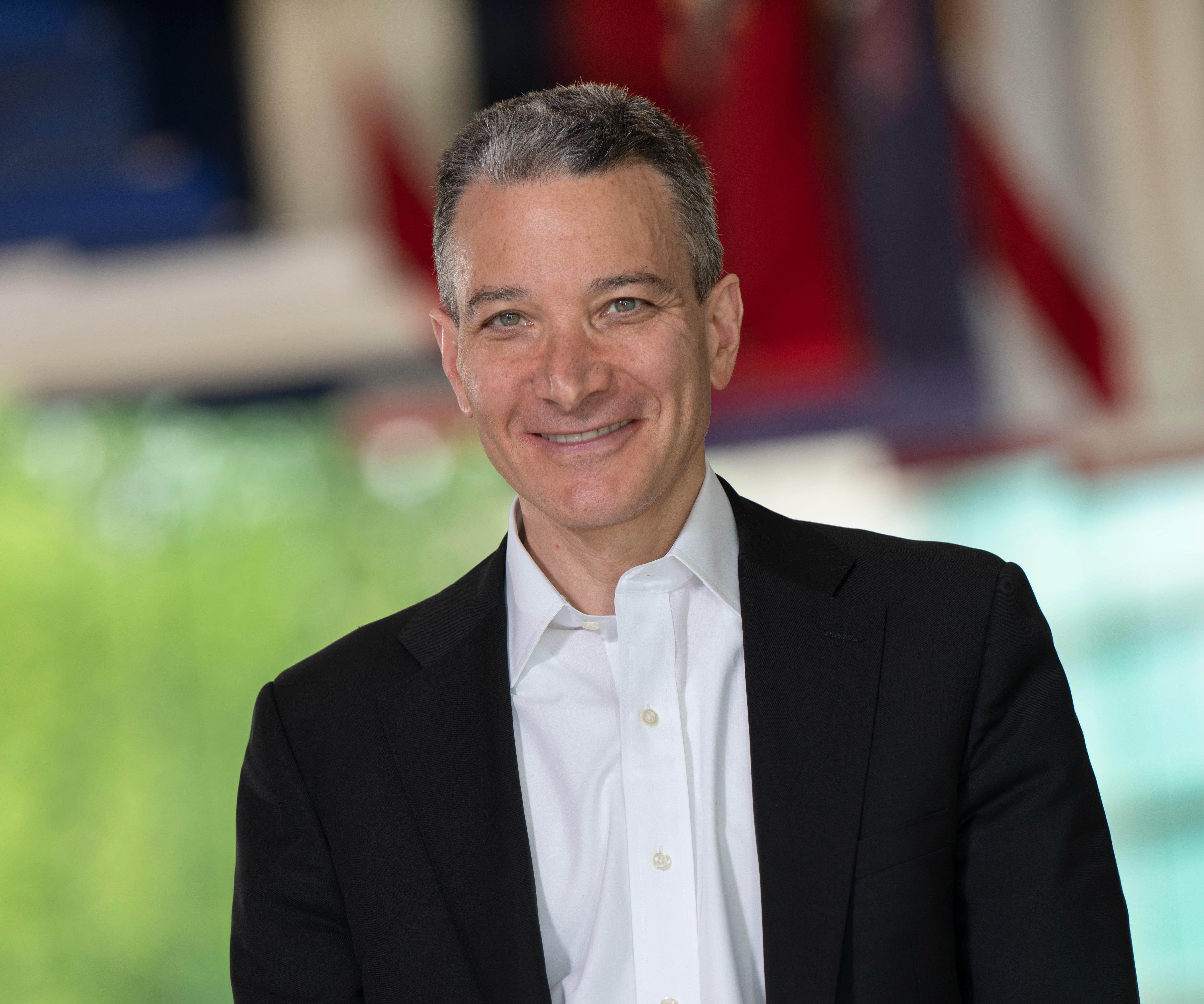
Jonathan Mahler P’26, staff writer for The New York Times Magazine, will discuss his recent book, The Gods of New York: Egotists, Idealists, Opportunists, and the Birth of the Modern City, 1986–1990, which examines the metamorphosis of New York City. Offering a “kaleidoscopic and deeply immersive portrait of a city whose identity was suddenly up for grabs” (Amazon), Mahler explores how the late ’80s marked a period of profound transformation. Bringing to the forefront a cast of outsized characters, extraordinary wealth, social problems, and mounting crisis, he illustrates the city’s rebirth as a glitzy capital of global finance—and, as the New York Times observes, a "Petri dish of ego, ambition, and class division." This era permanently reshaped New York’s ethos and social fabric—birthing figures whose influence dominates today and foreshadowing the forces that now divide the nation, all the while elevating Zohran Mamdani to power.

(Photo credit: David Jacobs)

Read more about the speaker

Jonathan Mahler P’26 is a longtime staff writer for The New York Times Magazine and the author of the bestselling Ladies and Gentlemen, the Bronx Is Burning, which was adapted as an ESPN miniseries; The Challenge; and The Gods of New York, which was named a best book of the year by the New York Times, the New Yorker, the Economist, and Amazon. At the Times magazine, he covers a wide range of topics including politics, entertainment, education, media, the law, sports. His journalism has received numerous awards and been featured in The Best American Sports Writing.

(Photo credit: David Jacobs)

Read less
Mon, April 6, 2026
Dinner Program
G. John Ikenberry

For eighty years, the United States has been the leader of a liberal international order, drawing allies and partners from around the world together in a system of trade, political, and security cooperation. Under Trump 2.0, the United States is now taking a wrecking ball to this order. Across the wider world, arms conflict, mercantilism, populist nationalism, and imperial geopolitics is on the rise, while multilateralism and global problem-solving is in decline. Does liberal internationalism—the cooperative building of world politics around openness and rules-based relations—have a future? Surprisingly, argues G. John Ikenberry, professor of politics and international affairs at Princeton University, the answer is yes.

Read more about the speaker

G. John Ikenberry is the Albert G. Milbank Professor of Politics and International Affairs at Princeton University in the Department of Politics and the School of Public and International Affairs. Ikenberry is also a Global Eminence Scholar at Kyung Hee University in Seoul, Korea. In 2018-2019, Ikenberry was a Visiting Fellow at All Souls College, Oxford University. In 2013-2014, Ikenberry was the 72nd Eastman Visiting Professor at Balliol College, Oxford, and a Fellow at All Souls College, Oxford. Ikenberry is a Fellow of the American Academy of Arts and Sciences. 

Ikenberry is the author of eight books, most recently, A World Safe for Democracy:  Liberal Internationalism in the Making of Modern World Order (Yale, 2020), and Debating Worlds: Contested Narratives of Global Modernity and World Order (Oxford, 2023). He is also author of After Victory: Institutions, Strategic Restraint, and the Rebuilding of Order after Major Wars (Princeton, 2001), and Liberal Leviathan: The Origins, Crisis, and Transformation of the American World Order (Princeton, 2011).

Professor Ikenberry will deliver the 2025-26 Lecture in Diplomacy and International Security in Honor of George F. Kennan.

Read less

This event is not yet open for registration.

Tue, April 7, 2026
Dinner Program
Ruth Marcus

Ruth Marcus, writer and political commentator, contributor to the New Yorker Magazine, and former staff writer, associate editor, and columnist at the Washington Post, will address issues confronting the modern American press including political interference and polarization, commercial dependence and powerful ownership structures, regulatory vulnerability, competition from social media, national attention deficit, AI generated content, rise of public distrust and alternative facts, journalistic ethics and dilemmas, and more. Is freedom of the press, as enshrined in the First Amendment of the U.S. Constitution, under siege? What are the stakes for our democracy and how do we sustain and preserve this central constitutional principle?

Read more about the speaker

Ruth Marcus is a contributing writer at The New Yorker who focusses on law, the courts, and the rule of law under President Trump. She joined The New Yorker after a 40-year career at the Washington Post, where, most recently, she was an associate editor and an opinion columnist. During her time at the Post, from where she resigned in protest in spring 2025, she covered the White House, the Supreme Court, and the Justice Department; served as deputy national editor; and was a deputy editor overseeing the op-ed section. She was a finalist for the 2007 Pulitzer Prize in Commentary. 

Marcus holds a B.A. from Yale College, where she wrote for the Yale Daily News, and a J.D. from Harvard Law School.

(Excerpted from the New Yorker Magazine)

Read less

This event is not yet open for registration.

Wed, April 8, 2026
Lunch Program
Jane Naomi Iwamura

How does the cinematic lens capture the evolution of the human soul? A decade remembered for the rise of the blockbuster, the 1990s also hosted a profound spiritual revolution led by filmmakers of color. Jane Naomi Iwamura, professor of religious studies at the University of the West, explores how Spike Lee, Gregory Nava, and Justin Lin utilized the language of film to map the interiority and religious landscapes of marginalized communities, challenging the secular and racial boundaries of American identity. At the heart of this inquiry is a deep analysis of Spike Lee’s 1992 epic, Malcolm X. By centering the spiritual metamorphosis of an American icon, Lee moved beyond political biography, using evocative cinematography and pacing to offer a visceral study of faith and conversion. These groundbreaking narratives dismantled stereotypes and laid the vital groundwork for a contemporary cinema that treats the screen as a mirror of our collective souls.

Read more about the speaker

Jane Naomi Iwamura is Professor of Religious Studies at the University of the West. Her interdisciplinary research focuses on Asian American religions, race, and popular culture in the United States, with a specialized emphasis on visual culture and Japanese American lived religions. She is the author of Virtual Orientalism: Religion and Popular Culture in the U.S. (Oxford, 2011) and co-editor of Revealing the Sacred in Asian and Pacific America (Routledge, 2003). Her scholarship has appeared in journals, including American Quarterly and Amerasia Journal.

Iwamura co-founded the Asian Pacific American Religions Research Initiative (APARRI), where she serves as a Co-PI and Project Director. She also sits on the National Editorial Board of the Journal of Feminist Studies in Religion

Iwamura holds a Ph.D. in Rhetoric from UC Berkeley and an MTS from Harvard Divinity School, bringing a rich background in philosophy, cultural studies, and religious history to her work.

Dr. Iwamura's Athenaeum presentation is co-sponsored by the Kutten Lectureship in Religious Studies at CMC.

Read less

This event is not yet open for registration.

Wed, April 8, 2026
Dinner Program
David Armitage

To mark the 250th anniversary of the US Declaration of Independence, David Armitage, Harvard's Lloyd C. Blankfein Professor of History, traces the Declaration's travels around the globe, to show how its meaning for Americans was different from the way other peoples understood it and how the Declaration encouraged the spread of anti-colonialism, opposition to empire, secession and statehood around the world right up to our own time.

Read more about the speaker

David Armitage is a prize-winning writer and teacher who has a worldwide reputation for his historical work. He is currently the Lloyd C. Blankfein Professor of History at Harvard University and an Honorary Fellow of St Catharine's College, Cambridge. 

Armitage has written extensively about the histories of Britain, the British Empire, and the United States, with a particular focus on the international and global trajectory of political ideas. His nineteen books as author or editor include The Ideological Origins of the British Empire (2000), Foundations of Modern International Thought (2014), Civil Wars: A History in Ideas (2017) and, most relevant to the Athenaeum lecture, The Declaration of Independence: A Global History (2007). He is currently working on a study of opera and international law.

Professor Armitage is the inaugural speaker for the Class of 1974 Speaker Series.

Read less

This event is not yet open for registration.

Marian Miner Cook Athenaeum

Claremont McKenna College
385 E. Eighth Street
Claremont, CA 91711