Marian Miner Cook
Athenaeum

A distinctive
feature of social and
cultural life at CMC


Welcome to The Athenaeum

Unique in American higher education, the Marian Miner Cook Athenaeum (the “Ath”) is a signature program of Claremont McKenna College. Four nights a week during the school year, the Ath brings scholars, public figures, thought leaders, artists, and innovators to engage with the CMC and Claremont College community. In addition, the Ath also hosts lunch speakers, roundtables, and smaller presentations in its two auxiliary dining rooms.

For decades, the Ath has hosted a spectrum of luminaries with expertise and insight on a wide range of topics, both historical and contemporary. In the Ath’s intimate yet stimulating setting, students, faculty, staff, and other community members gather to hear the speaker, pose questions, and to build community and exchange ideas over a shared meal.

At the core of the Ath is a longstanding commitment to student growth and learning. Central to the Ath are its student fellows, selected annually to host, introduce, and moderate discussion with the featured speaker. Priority is given to students in attendance during the question-and-answer session following every presentation. Moreover, speakers often take extra time to visit a class, meet with student interest groups, or give an interview to the student press and podcast team.

Thu, March 5, 2026
Dinner Program
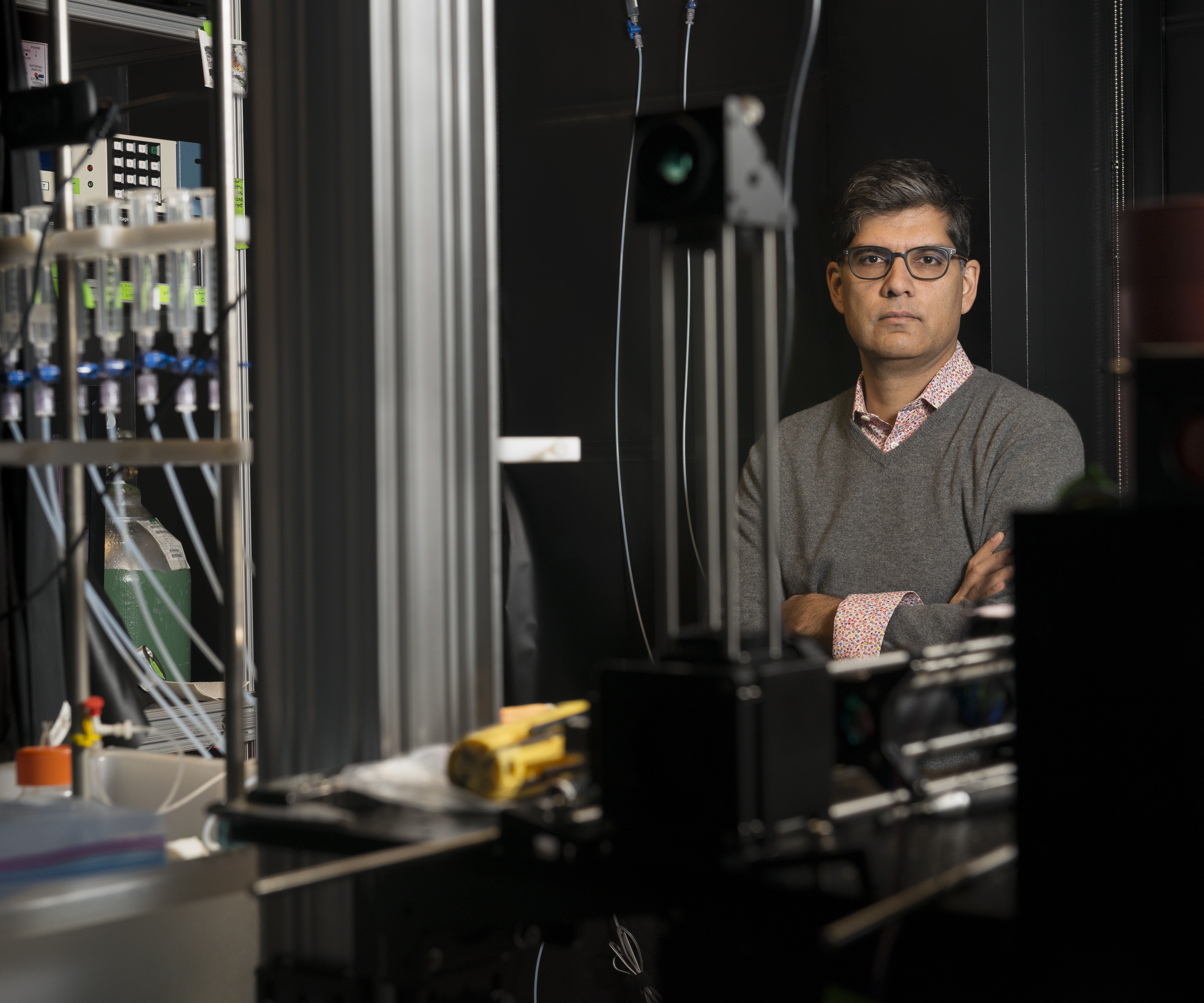
Sandeep Robert Datta P'26

Sandeep Robert Datta P’26, M.D., PhD., professor of neuroscience at Harvard University, will discuss how new technology is revolutionizing our understanding of the brain and how abrupt changes in the compact between universities and the government threaten to derail this progress.


Read more about the speaker

Sandeep Robert Datta P’26 is a professor in department of neurobiology at Harvard Medical School. His lab focuses on understanding how sensory cues — particularly odors — are detected by the nervous system, and how the brain transforms information about the presence of salient sensory cues into patterns of motivated action. This work involves studying genes involved in detecting sensory information, revealing the patterns of neural activity deep in the brain that encode sensory maps of the outside world, and probing the fundamental statistical structure of behavior itself. His lab has developed AI-based technologies that allow researchers to understand how the brain builds body language and revealed why COVID-19 causes patients to lose their sense of smell. 

Datta has published numerous articles on his research in journals including Cell, Science and Nature, is a reviewer and an editor at multiple scientific journals, and is an Associate Member of the Broad Institute. Dr. Datta has received the NIH New Innovator Award, the Burroughs Welcome Career Award in the Medical Sciences, the Alfred P. Sloan Research Fellowship, the Searle Scholars Award, the Vallee Young Investigator Award, the McKnight Endowment Fund Scholar Award and has been named a fellow of the National Academy of Science/Kavli Scholars program. Datta has also co-founded or advised many neuroscience start-ups, including Neumora, Gilgamesh Therapeutics, Osmo, Tenvie and Axiom Labs.

A graduate of Yale College, Datta earned his M.D./Ph.D. at Harvard University, then worked as a postdoc with the Nobel laureate Richard Axel at Columbia, and joined the Harvard faculty in 2009.

Read less

This event is not yet open for registration.

Mon, March 9, 2026
Lunch Program
Daniel Scroop

Daniel Scroop, a historian of the United States based at the University of Glasgow in Scotland and currently a Fulbright Scholar in the U.S., charts the relationship between U.S. history and the public realm since the end of the Second World War. Based on new research in the vast correspondence of William E. Leuchtenburg (1922-2025), one of America's preeminent historians and for several decades its leading historian of the New Deal, he examines how one historian's choices about civil rights, Vietnam, and the turmoil on campuses in the 1960s and 1970s illuminate the character of American liberalism and its connection to the historical profession in the second half of the twentieth century.

Read more about the speaker

Daniel Scroop is a historian of the United States based at the University of Glasgow in Scotland where he is Director of Research for the School of Humanities and a member of the Andrew Hook Centre for American Studies. He writes on the New Deal, American liberalism, and the shifting ideological contours of U.S. history, and is author of Mr Democrat: Jim Farley, the New Deal, and the Making of Modern American Politics, the first book-length study of Franklin D. Roosevelt's campaign manager. He is a Fellow of the Royal Historical Society, a winner of the Constance Rourke Prize of the American Studies Association, and a recipient of the Walter Hines Page Fellowship at the National Humanities Center. 

Scroop completed his undergraduate and postgraduate level studies at the University of Oxford, where her earned his B.A. in 1995 and his D.Phil in 2001. 

During spring 2026, he is a Fulbright Scholar at Emory and Henry University in south-west Virginia, where he is teaching and writing on the place of history in American public life since 1776.

Read less

This event is not yet open for registration.

Mon, March 9, 2026
Dinner Program
Don Romesburg '93

Historian Don Romesburg '93, a lead scholar implementing California's groundbreaking FAIR Education Act, will discuss the long journey to bring LGBTQ history education to the nation's K-12 schools. Today, many states have followed California’s inclusive lead, yet other states and the federal administration are enacting systematic erasures of queer and trans histories. In 2025, the Supreme Court further restricted inclusive curriculum in ways that have sent shockwaves across the country. Romesburg will contextualize these tensions and share strategies to make dynamic history education relevant for all students and families.


Read more about the speaker

Don Romesburg ’93 is the author of Contested Curriculum: LGBTQ History Goes to School (Rutgers UP, 2025) and editor of the Routledge History of Queer America (2018). As the lead scholar working with advocates to pass the FAIR Education Act, he helped usher LGBTQ content into California's 2016 K-12 History-Social Science Framework and subsequent textbooks. He now trains educators on implementation. For these efforts, he is the namesake of the LGBTQ+ History Association’s Don Romesburg Prize for K-12 Curriculum. Romesburg is also a co-founder of the GLBT Historical Society Museum in San Francisco and Managing Editor of TSQ: Transgender Studies Quarterly. 

Romesburg earned a Ph.D. in U.S. History with an interdisciplinary emphasis on Women, Gender, and Sexuality from the University of California, Berkeley, an MA in history from University of Colorado, Boulder, and a history BA from Claremont McKenna College. 

He now serves as Dean of Social Sciences and Fine Arts at Clark College in Vancouver, WA.

Read less

This event is not yet open for registration.

Tue, March 10, 2026
Dinner Program
Steve Grove '00

Steve Grove '00 has spent his career at the intersection of politics, media, and tech. His recent book, How I Found Myself in the Midwest, shares his journey of leaving a successful career at Google in Silicon Valley to move back to his home state of Minnesota to join state government, and then local news, where he now serves as the publisher of The Minnesota Star Tribune. Grove's boomerang journey back home landed him in a state that's faced a series of crises that have caught global attention in the last five years. His talk will explore what he's learned about navigating crises—and strengthening technology, government, and media organizations from the inside.

Read more about the speaker

Steve Grove '00 is CEO and publisher of the Minnesota Star Tribune. Previously, he was Minnesota’s commissioner of employment and economic development. Before moving back to his home state, Grove built a career in Silicon Valley as an executive at Google and YouTube, most recently as the founding director of the Google News Lab and previously as YouTube’s first head of news and politics.

A graduate of Claremont McKenna College with a Master’s degree from the Harvard Kennedy School, Grove has written for several national publications and has served as an advisor to the White House and State Department on counter-terrorism strategy. Steve and his wife Mary are the cofounders of Silicon North Stars, a nonprofit that helps underserved youth find career pathways in technology. They are the proud parents of eight-year-old twins, a yellow lab, and two farm cats.

Read less

This event is not yet open for registration.

Wed, March 11, 2026
Dinner Program
Diane Wagner '87

The Migrant Child Farmworkers – Now High-Profile Professionals© is an original documentary short film (executive producer Diane Wagner ’87, director Jesse Gift) featuring Xolo Maridueña, star of Blue Beetle and Cobra Kai. This poignant and inspiring film showcases eleven children, mostly of poor farm-working families, who overcame homelessness, hunger, poverty, neglect, and abuse to become successful and prominent members of our society. As children, many worked full-time as migrant child farmworkers with their earnings going to help the family survive. Today they are engineers, doctors, lawyers, medical professors, researchers, educators, and leaders elected to the U.S. Congress and California State Assembly and Senate. Their achievements, in defiance of formidable odds, societal cruelty, and adversity, are a testament to the indomitable human spirit.

Read more about the speaker

Diane Wagner ‘87 is the executive producer of The Migrant Child Farmworkers – Now High-Profile Professionals©. After a successful career in market research consulting for Fortune 500 clients, Wagner is now an independent storyteller who is passionate about telling stories that inspire audiences, especially children, to elevate their self-image, better recognize their potential, and gain access to more educational opportunities.

Wagner studied Economics at Claremont McKenna College and subsequently earned her MBA from U.C. Irvine.

The screening will be followed by comments and Q & A with Diane Wagner and Jesse Gift and might also include featured presenter Xolo Maridueña, Xolo’s Hollywood manager Brandon Guzmán (a former undocumented migrant child farmworker who is also featured in the film), former Congressman Tony Cárdenas, Congressman Raul Ruiz and more. This website will be updated accordingly.

This program is co-sponsored by the President’s Office and Open Academy.

SPECIAL SCHEDULE: Film will be screened during dinner starting at 6:20 pm and will be followed by comments from Diane Wagner and audience Q & A.
 

Read less

This event is not yet open for registration.

Mon, March 23, 2026
Dinner Program
Michael Vorenberg

When does a war begin? When does it end? Start dates and end dates for wars are readily available in textbooks, but are the beginnings and endings really so obvious? Currently, the U.S. claims not to be at war with any nation, yet it is claiming the existence of war as justification for all sorts of policies, from deportation to military occupation of American cities to tariffs. The confusion around the meaning of wartime is not new. It dates back to the U.S. Civil War. Michael Vorenberg, professor of history at Brown University, examines the ways that the Civil War created modern, elastic notions not only of war power but also of war time.
 

Read more about the speaker

Michael Vorenberg received his A.B. and Ph.D. from Harvard University and is professor of history at Brown University, where he has taught since 1999. He is the author of Final Freedom: The Civil War, the Abolition of Slavery, and the Thirteenth Amendment, a Finalist for the Lincoln Prize and a major source for Steven Spielberg’s 2012 film Lincoln. His most recent book is Lincoln’s Peace: The Struggle to End the American Civil War, which was published by Alfred A. Knopf in 2025. He is currently on the board of editors of the Journal of Constitutional History and was previously on the board of editors of Law and History Review. He is also a Distinguished Lecturer for the Organization of American Historians. His forthcoming article comparing declared states of emergency in Civil War-era America and present-day America will be published in the summer of 2026.

Professor Vorenberg's Athenaeum presentation is co-sponsored by the Salvatori Center at CMC.
 

Read less

This event is not yet open for registration.

Tue, March 24, 2026
Dinner Program
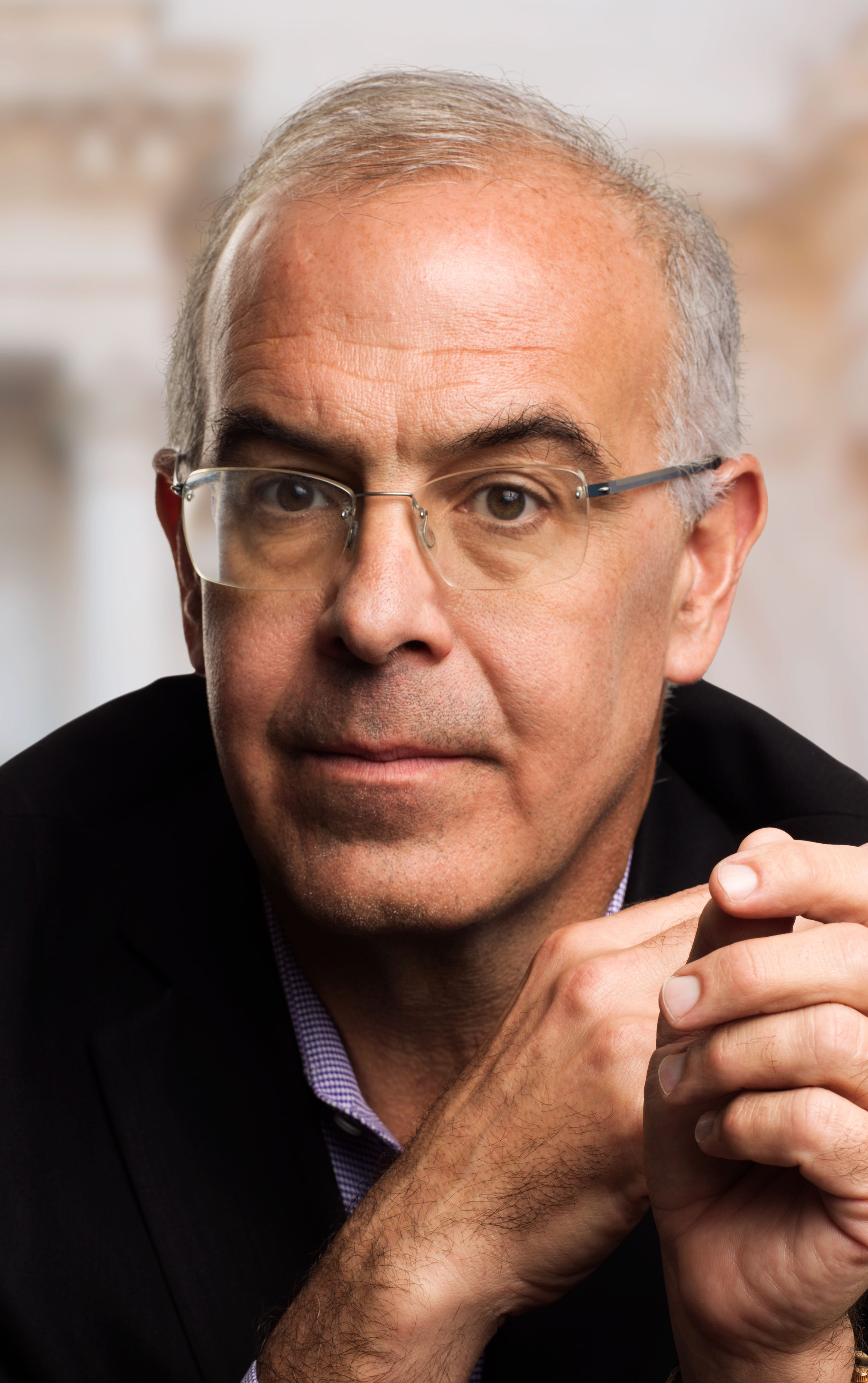
David Brooks

David Brooks is an opinion columnist at the New York Times and frequent contributor to media outlets nationwide. He writes about "political, social and cultural trends, the clash of ideas and the always tricky subject of moral formation." (More information forthcoming.)

(Photo credit: Howard Schatz©SCHATZ-ORNSTEIN)

Read more about the speaker

David Brooks is an opinion columnist at the New York Times and frequent contributor to media outlets nationwide. He writes about "political, social and cultural trends, the clash of ideas and the always tricky subject of moral formation." (Source: NYT)( More information forthcoming.)

Mr. Brooks's Athenaeum presentation is co-sponsored by the Valach Speaker Series and the Open Academy at CMC.

(Photo credit: Howard Schatz©SCHATZ-ORNSTEIN)

Read less

This event is not yet open for registration.

Wed, March 25, 2026
Dinner Program
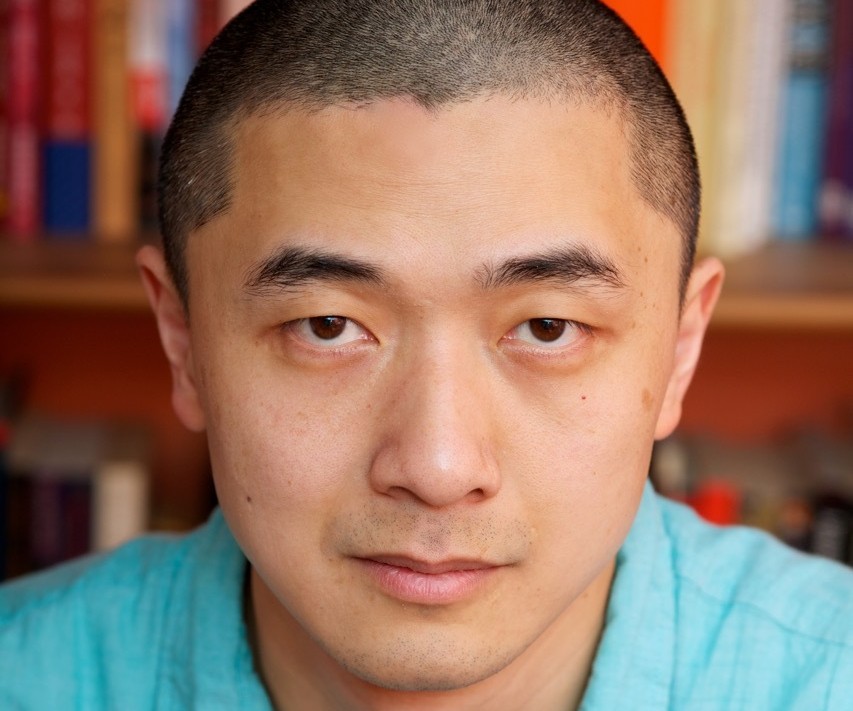
Ken Liu

Through a series of images drawn by artists from the past imagining life in the future, Ken Liu, award-winning author of speculative fiction, asks the audience to think through provocative questions about the science fictional imagination. What do sci-fi authors tend to get wrong about the future? What do they tend to get right? Is science fiction about “predicting” the future? And just why is the future so difficult to pin down?

Photo credit: Lisa Tang Liu

Read more about the speaker

Ken Liu is an American author of speculative fiction. A winner of the Nebula, Hugo, and World Fantasy awards for his fiction, he has also won top genre honors in Japan, Spain, and France.

Liu’s most characteristic work is the four-volume epic fantasy series, The Dandelion Dynasty, in which engineers, not wizards, are the heroes of a silkpunk world on the verge of modernity. His debut collection of short fiction, The Paper Menagerie and Other Stories, has been published in more than a dozen languages. A second collection, The Hidden Girl and Other Stories, followed. He also penned the Star Wars novel, The Legends of Luke Skywalker. His latest book, All That We See or Seem, is a techno-thriller about the fight against loneliness in the age of AI.

He’s often involved in media adaptations of his work. Recent projects include The Regular, under development as a TV series; Good Hunting, adapted as an episode in season one of Netflix’s breakout adult animated series Love, Death + Robots; and AMC’s Pantheon, adapted from an interconnected series of Liu’s short stories.

Prior to becoming a full-time writer, Liu worked as a software engineer, corporate lawyer, and litigation consultant. He frequently speaks at conferences and universities on a variety of topics, including futurism, machine-augmented creativity, history of technology, bookmaking, and the mathematics of origami.

Mr. Liu is the Gould Center for Humanistic Studies' 2025-26 Ricardo J. Quinones Lecturer.

Photo credit: Lisa Tang Liu

(Special Note: This event had originally been scheduled for Monday, September 22, 2025. We are honoring the head table sign-ups from that original date. Students who had secured a head table spot (or were waitlisted for the head table) will have the right of first refusal for the head table. If you had a confirmed spot at the head table, we are aware of who you are and we will contact you directly in early March.)

Read less

This event is not yet open for registration.

Tue, March 31, 2026
Dinner Program
Jeff Kukucka

Though often seen as infallible, forensic investigations are done by humans, and humans are imperfect. Jeff Kukucka, professor of psychology at Towson University, will draw from his work as a researcher, expert witness, and government consultant to explain how the brain can produce unsound forensic decisions and how crime labs can (but often neglect to) adopt science-based protections against bias and error.

Read more about the speaker

Jeff Kukucka is a professor of psychology at Towson University and a decision scientist whose work aims to optimize the human element of forensic and medicolegal decision-making. He previously held a leadership position on NIST's OSAC for Forensic Science—a federal organization that develops and promotes best practice standards for all areas of forensic science—and he recently oversaw the nation's first-ever independent audit of restraint-related deaths in police custody, the findings of which raised concerns over bias and error in autopsy decisions. He also frequently trains forensic examiners and attorneys on these issues, and he has testified as an expert witness in nine U.S. states.

Read less

This event is not yet open for registration.

Wed, April 1, 2026
Dinner Program
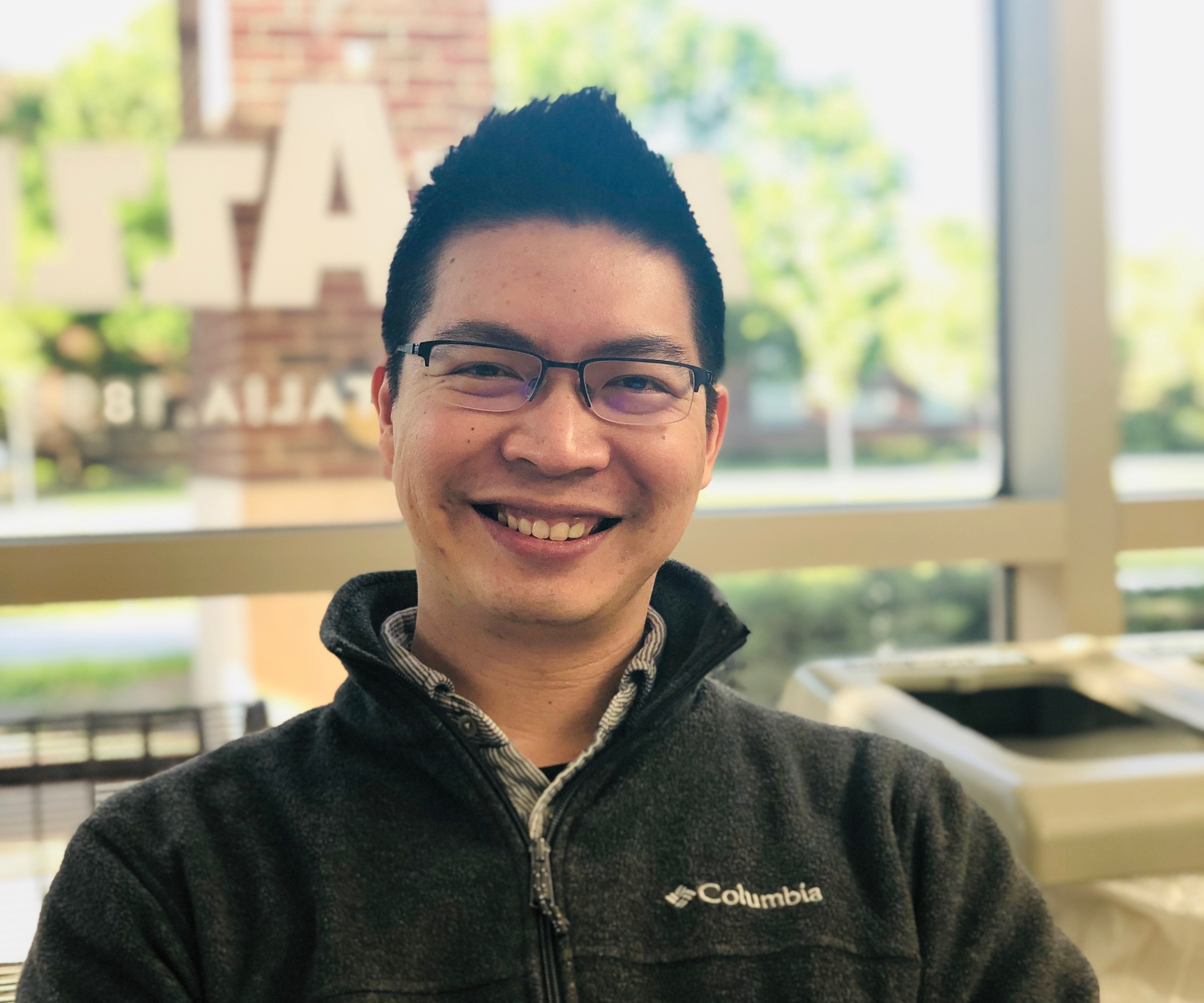
Louis Tay

Louis Tay, William C. Byham Professor of Industrial-Organizational Psychology at Purdue University and co-founder of ExpiWell, will address how psychological measurement can transform the way we detect and regulate bias in AI. As AI increasingly shapes consequential decisions in hiring, lending, and healthcare, public debates about algorithmic fairness often conflate three distinct concepts: difference, bias, and unfairness. This undermines both scientific evaluation and effective policymaking. Tay will discuss disentangle these concepts, providing principled approaches for evaluating bias in algorithmic assessments and large language model applications. The talk will conclude with implications for AI governance frameworks, anti-discrimination enforcement, and organizational accountability in an era of automated decision-making.

Read more about the speaker

Louis Tay is the William C. Byham Professor of Industrial-Organizational Psychology at Purdue University and Co-Founder of ExpiWell. A leading expert in psychological measurement, well-being, and artificial intelligence applications in psychology, Tay has pioneered frameworks for understanding how AI systems can be rigorously evaluated for bias using principles from psychometric theory.

Tay's scholarship has shaped multiple fields through his editorial leadership of major reference works. He has co-edited five handbooks: Big Data in Psychological Research (APA Books), Handbook of Well-Being (DEF Publishers), Handbook of Positive Psychology Assessment (Hogrefe), Oxford Handbook of the Positive Humanities (Oxford), and Technology and Measurement around the Globe (Cambridge). His research has appeared in journals including American Psychologist, Nature Human Behavior, Psychological Bulletin, and Journal of Applied Psychology.

Tay has contributed to United Nations research reports on well-being and consults for top tech companies and Fortune 500 organizations on topics including AI and measurement bias. He currently leads research funded by the John Templeton Foundation examining whether and how AI conversational agents can cultivate character virtues. As co-founder of the tech company ExpiWell, he developed a platform used by researchers worldwide for ecological momentary assessments.

Dr. Tay's Athenaeum presentation is co-sponsored by the President’s Office and Open Academy.

Read less

This event is not yet open for registration.

Marian Miner Cook Athenaeum

Claremont McKenna College
385 E. Eighth Street
Claremont, CA 91711