


Budget Policy Seminars
The Rose Institute has always prided itself on providing students with analytical tools to dissect complex legislative issues. That mission took a step forward with the launch of the Budget Policy Seminars, a three-part series designed to pull back the curtain on the engine room of governance: the budget. The seminars were a brainchild of Jada Cook '26. She noted that the common thread, and often the primary hurdle, was budget policy. She recognized a gap between theoretical policy analysis and the practical realities of fiscal constraints. She discussed the idea with members of the Board of Governors and Senior Staff at a Board of Governors dinner in 2025, articulating a vision in which Rose students wouldn't just critique the intent of legislation but also master the mechanics of its funding. She argues that it is necessary for students to understand the budgetary constraints the legislation faces. Three seminars were designed to build a foundation of knowledge that would allow students to engage deeply with professional practitioners.
To ensure participants had a strong foundation to build on, Jada led the first session on February 13 with a presentation on the basics of budget policy. She walked students through the California budget timeline, the roles of different actors such as the Legislative Analyst's Office, and the impact of key voter-approved propositions. She also expanded the scope beyond Sacramento, explaining the nuances of county and city budget processes to give students a holistic view of how public funds are managed at every level of California government. This technical grounding, Jada thought, was essential for the interactive panels that followed.
At the second session, held on February 20, the focus shifted to the intersection of municipal management and advocacy. The panel featured Ontario City Manager Scott Ochoa '93 and Christopher Townsend '82, president of Townsend Public Affairs. The discussion centered on the high-stakes world of local administration, highlighting the key role of the city manager in maintaining fiscal solvency and the complexities of the earmark process. A major takeaway for the students was why advocacy by outside firms on behalf of city governments is so important for securing resources in a competitive legislative environment. The session pulled back the curtain on how local leaders navigate the labyrinth of state and federal funding.
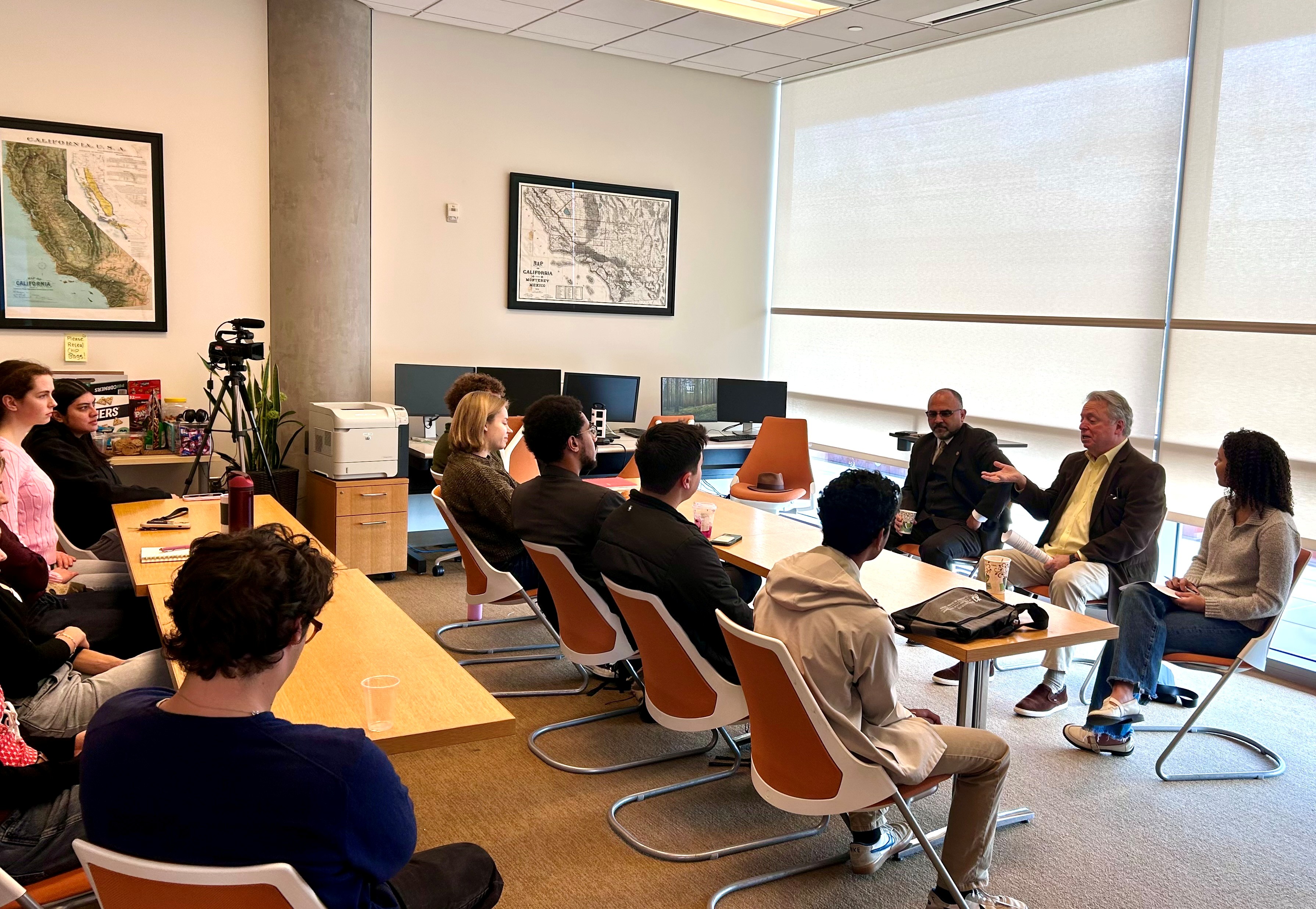
February 20, 2026: Scott Ochoa '93 and Christopher Townsend '82 discuss local government administration and advocacy.
On February 27, the final seminar, which explored the synergy between different levels of government, featured a panel with former City Manager Eric Figueroa '92 P'21 and Deborah Gonzalez '85 P'14, Director of Government Affairs at the Public Policy Institute of California (PPIC). The conversation delved into how state budgeting decisions directly impact city budgets and the specific steps state legislators take when evaluating budget proposals. The speakers also highlighted how vastly different the experience of managing a city can be depending on its specific demographics and economic base.
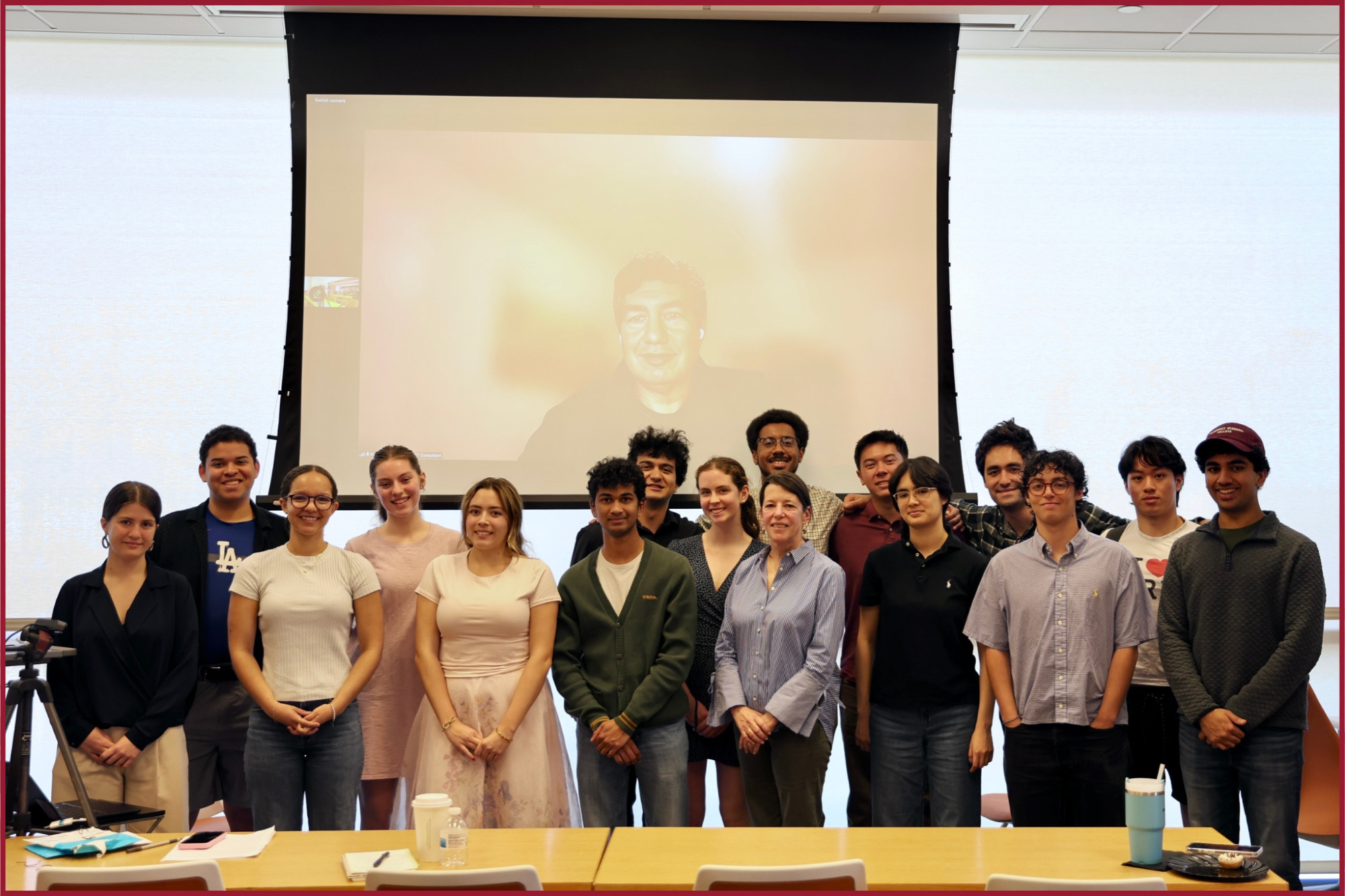
Among those who attended the seminar on February 27 are, from left, Elisa Booth '27, David Taylor '26, Jada Cook '26, Kaylin Nydam '29, Rhiannon Worline '28, Shivum Kalyanam '29, Shayan Abbasi '29, Rosemary McManus HM'28, Deborah Gonzalez '85 P'14, Chad McElroy '26, Toby Forster '29, Deborah Aguirre '28, Ryan Shakiba '26, Sid Goldfader-Dufty PZ'28, Sam Yao '27, and Jathan Pai '28. Eric Figueroa '92 P'21, is shown on the screen.
At each seminar, Jada moderated the discussion with pointed questions before opening the floor to the audience. The students showed enthusiasm for the series, engaging in spirited Q&A sessions and expressing an eagerness to connect with Board members and experts.